
- Buy Crypto
- Markets
 Futures
- Spot
- Copy Trade
- Earn
- More
Ripple’s Legal Officer Slams Senator Warren Over Stablecoin Bill Opposition
By: cointribuneen|2025/05/07 19:31:26
0
Share
Ripple’s Chief Legal Officer, Stuart Alderoty, has criticized Elizabeth Warren, a United States Senator representing Massachusetts, for opposing key legislation aimed at regulating stablecoins in the United States. The bill, called the GENIUS Act (Guiding and Establishing National Innovation for US Stablecoins ), is now at the center of political tension among lawmakers. Alderoty expressed his frustration in a post on X, stating that Senator Warren’s long-standing opposition to the crypto industry has led her to block a bipartisan bill designed to protect consumers. He accused the senator of putting political gain ahead of sound policymaking. The Ripple CLO made this comment as the stablecoin bill faces growing resistance in the Senate, especially from Democrats who had earlier signaled a willingness to work with Republicans on a version of the legislation. The GENIUS Act proposes a set of rules that would regulate how stablecoins are issued and managed in the country. It would require stablecoins to be backed entirely by real U.S. dollars or short-term U.S. Treasury bonds, ensuring that every token issued is matched by assets considered safe and liquid. In addition, companies would be required to publicly disclose their reserve holdings each month. For issuers with more than $50 billion in stablecoins, the law would mandate annual financial audits to enhance transparency and accountability. These measures aim to reduce the risk of fraud and financial instability in the stablecoin market. Warren’s Objection and the Trump Factor Senator Warren has pushed back against the bill, urging the Senate not to pass it. Over the weekend, she raised concerns about what she described as a shady deal between the Trump family and the United Arab Emirates (UAE). According to Warren, the deal resulted in a Trump-associated stablecoin suddenly becoming the seventh largest in the world. She claimed the surge in the stablecoin’s market value stemmed from a “shady crypto deal” involving the UAE, which allegedly committed a large amount of funding. Warren framed the situation as an example of political and financial corruption—arguing that powerful interests are using crypto for personal gain while regulatory protections remain weak. Democrats Reverse Support Over Last-Minute Changes On May 3, reports surfaced that key Senate Democrats withdrew support for the latest version of the GENIUS Act after Republicans introduced sudden revisions. According to Democratic aides and senators involved in the talks, the version presented for floor consideration removed several improvements that had been negotiated in earlier bipartisan discussions. Last Thursday, Senate Minority Leader Chuck Schumer advised his fellow Democratic senators to hold off on pledging their support. He urged them to use their influence to push for additional changes, particularly in how the bill would regulate foreign companies like Tether, the world’s largest stablecoin issuer. Tether, based outside the U.S., has long faced questions about the transparency of its reserves and whether it fully complies with international financial laws. Arizona Senator Ruben Gallego, a Democrat and one of nine senators who signed a joint statement over the weekend, defended the party’s decision to oppose the bill in its current form. In a post on X, Gallego said Democrats had been working with Republicans in good faith to shape legislation that balances innovation with proper oversight. “ This isn’t some reversal out of nowhere, ” Gallego said. “The bill that was introduced for floor consideration back-pedaled on a lot of the progress we made and did not include other improvements we sought.” He added that Democrats were not willing to support a version of the bill that ignored their input and weakened the consumer protections they had fought to include. Despite the current standoff, lawmakers from both parties appear open to further negotiations.
You may also like

Cursor "Shell" Kimi Controversy Reversed: From Copyright Infringement Allegations to Authorized Collaboration, China's Open Source Model Once Again Becomes a Global AI Foundation
Cursor was accused of being based on Kimi K2.5, which sparked controversy, and was later confirmed to be compliant through Fireworks AI due diligence.

The Real Reason Tokens Don't Sell: 90% of Crypto Projects Overlook Investor Relations
Provide an Investor Relations Best Practices Guide for Crypto Projects.

Is the income of pump.fun real, earning a million dollars a day despite the market downturn?
If it can really earn this much, what is the reason for the low price of $PUMP?

The real reason why tokens are not selling: 90% of crypto projects neglect investor relations
Investor Relations Practice Guide for Cryptocurrency Projects.

Who is the true winner of the "Tokenization" narrative?
Virtually everyone benefits, but the reason for the benefit, the timing, and the underlying logic are completely different.

Moss: The Era of AI-Traded by Anyone | Project Introduction
AI Trading Agent is rapidly growing its infrastructure.

Chip Smuggling Case Exposes Regulatory Loophole | Rewire News Evening Update
AI chips have become a strategic asset more sensitive than missiles

How a Structured AI Crypto Trading Bot Won at the WEEX Hackathon
Ritmex demonstrates how disciplined risk control and structured signals can make an AI crypto trading bot more stable and reliable on WEEX, highlighting the importance of combining execution discipline with scalable AI trading systems.

Old Indicator Fails, Three Major New Signals Emerge: BTC True Bottom May Still Be Below $60K
When the grocery shopping auntie on the subway, or Tony the hairdresser, start asking you about BTC, crypto, and cryptocurrency investments, selling immediately will be the only best option.

Meeting OpenClaw Founder at a Hackathon: What Else Can Lobsters Do?
Imperial College London MetaGame: AI Agent × Web3 Landing Three Major Directions.
Huang Renxun's Latest Podcast Transcript: NVIDIA's Future, Embodied Intelligence and Agent Development, Soaring Demand for Inferencing, and AI's PR Crisis
The future of competition is not only about whose model is bigger, whose computing power is stronger, but also about who understands the industry better, who can more deeply integrate AI into real processes, and who can organize these capabilities into a set of executable, scalable systems
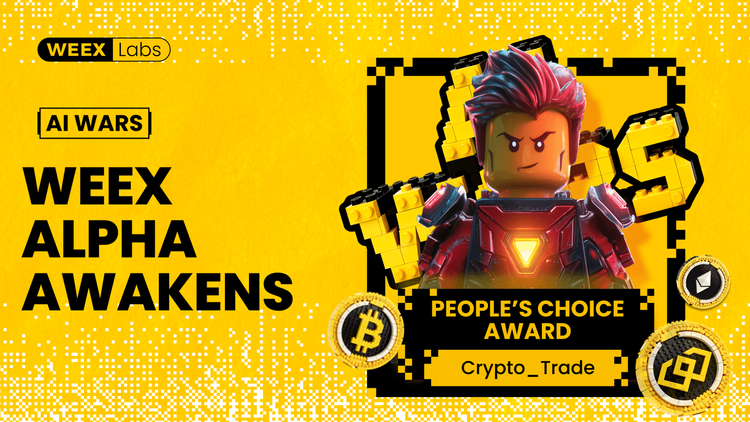
How a Structured AI Crypto Trading Bot Won at the WEEX Hackathon
Crypto_Trade shows how structured inputs and controlled adaptability can build a more stable and reliable AI crypto trading bot within the WEEX AI Trading Hackathon, highlighting a practical path toward scalable AI trading systems.

AI Starts to Devour the Manufacturing Industry | Rewire News Morning Edition
When Bezos starts using AI to buy factories instead of building data centers, it shows that he believes the next wave of AI's value is not inside the box.

When Scaling Meets Speed, Ethereum Foundation Introduces "Hardness" to Safeguard the Base Layer
Hardness is a protocol-level commitment to Ethereum core properties, including censorship resistance, privacy, security, and permissionlessness.
Google, Circle, Stripe Flock Together to Let AI Spend Money: Payment Giants' Joys and Worries in 2026 Q1
The real enemy is no longer each other, but zero cost itself

$100 Billion Factory Purchase: Bezos and Middle Eastern Capital Shift AI Money from Cloud to Shop Floor
Bezos doesn't invest in a new model; he invests in a supply chain.

Xiaomi and MiniMax both unleash their ultimate moves, signaling the start of the Agent Pricing War.
No brand, no marketing, let developers vote with their feet in 8 days

Predicting markets has taken the spotlight, but the Perp DEX has been quietly waging war on traditional exchanges.
During a weekend of relentless volatility, while traditional financial markets were closed, another wave of investors was busy trading gold, oil, and silver on a blockchain platform.
Cursor "Shell" Kimi Controversy Reversed: From Copyright Infringement Allegations to Authorized Collaboration, China's Open Source Model Once Again Becomes a Global AI Foundation
Cursor was accused of being based on Kimi K2.5, which sparked controversy, and was later confirmed to be compliant through Fireworks AI due diligence.
The Real Reason Tokens Don't Sell: 90% of Crypto Projects Overlook Investor Relations
Provide an Investor Relations Best Practices Guide for Crypto Projects.
Is the income of pump.fun real, earning a million dollars a day despite the market downturn?
If it can really earn this much, what is the reason for the low price of $PUMP?
The real reason why tokens are not selling: 90% of crypto projects neglect investor relations
Investor Relations Practice Guide for Cryptocurrency Projects.
Who is the true winner of the "Tokenization" narrative?
Virtually everyone benefits, but the reason for the benefit, the timing, and the underlying logic are completely different.
Moss: The Era of AI-Traded by Anyone | Project Introduction
AI Trading Agent is rapidly growing its infrastructure.


 App
App