
Tether Freezes $182 Million in Assets in One Day, Is USDT Still a Neutral Coin?

 Prefer us on Google


Original Title: Tether faces its Euroclear moment
Original Author: Izabella Kaminska
Translation: Peggy, BlockBeats
Editor's Note: Tether's action of freezing around $182 million USDT on the Tron blockchain has been seen by some analysts as its "Euroclear moment," when a financial infrastructure originally seen as a neutral channel begins to cooperate with law enforcement to freeze assets, transforming it from just a stablecoin to part of the power structure.
This article starts with the Venezuela-related fund dispute and discusses how this event may impact the "alternative dollar" narrative of USDT in the global south and sanctioned regions, reshaping the risk perception of stablecoins.
Below is the original text:
The most significant news this week was Tether freezing around $182 million USDT across five wallet addresses on the Tron blockchain in a single day, marking one of its largest single-day actions to date.
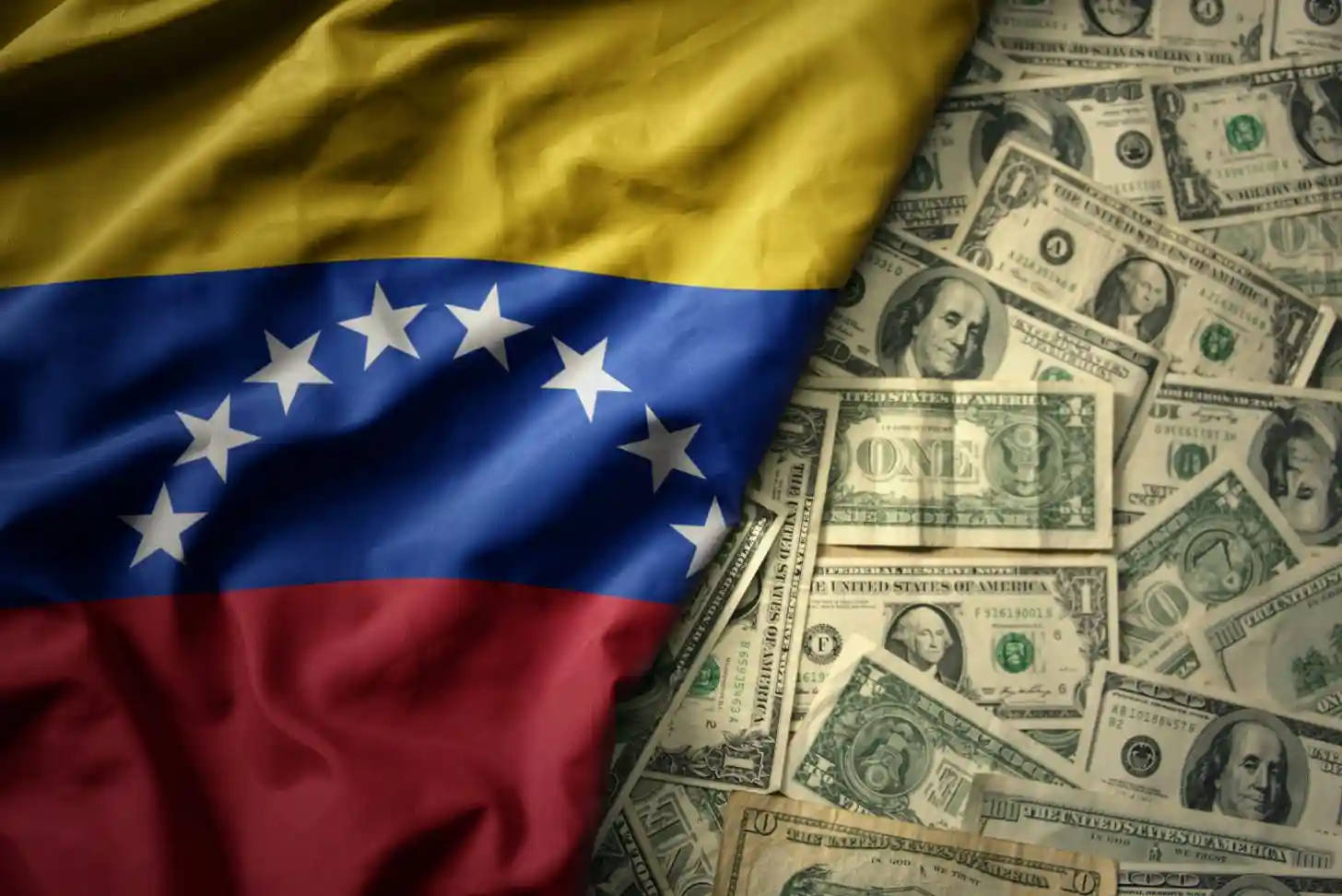
There are suspicions that these assets may belong to the Venezuelan government, and Tether, long seen as a "haven for illicit fund flows," is now seizing (or freezing) sovereign assets at the request of the U.S. government.
What we can confirm at the moment is that this operation was indeed carried out following compliance and law enforcement processes. Although officials have not confirmed that these addresses hold "Venezuelan oil revenue," analysts and on-chain observers widely make this associative interpretation.
Online discussions also suggest that some of the frozen funds may overlap with wallet addresses used in Venezuela-related activities, considering the country's high reliance on USDT, this speculation is not unfounded.
According to The Wall Street Journal, Venezuela's oil trade has become deeply intertwined with the Tether stablecoin. The report states that a podcast by Venezuelan economist Asdrúbal Oliveros mentioned: the stablecoin has created a "direct channel" between the Venezuelan economy and the crypto world, a connection primarily driven by the oil industry.
In the podcast, Oliveros points out that nearly 80% of the country's oil income is being received in the form of cryptocurrency or stablecoin. He adds that it's this massive influx of digital assets that has made USDT a recurring keyword in Venezuelan commercial exchanges and corporate operations.
However, Oliveros also emphasized that it is difficult for the government to convert this crypto wealth into liquidity that can be used in the real economy because to exchange it for fiat currency, it must go through a series of compliance checks. This has led to a large amount of funds being "locked" on-chain. As a result, Venezuela's oil revenue has not flowed back into the domestic economy, affecting the official exchange rate and causing a currency spike.
Oliveros also suggested that the Venezuelan government has not demonstrated professionalism in managing its cryptocurrency and stablecoin wealth. He mentioned that due to excessive reliance on personal wallets, internal lack of compliance processes or regular reconciliation mechanisms, some wallet mnemonic keys may have been mishandled or even lost in the management chaos.
Survivability Issue?
If it is ultimately confirmed that the frozen funds do belong to Venezuela, then the question on everyone's mind is: how will this impact Tether's reputation as an "alternative currency system" in developing countries, especially in those regions facing financial instability or international sanctions.
On Tuesday, during the launch event of the new Bitcoin+Gold exposure ETN product BOLD by Bytetree on the London Stock Exchange, prominent figures in the London crypto and gold investment community speculated that this event could have a strong impact on stablecoins, potentially extending beyond that.
Bitcoin investor, advocate, and comedian Dominic Frisby (also a strong supporter of digital privacy) told The Peg that he is not surprised that this event is sparking discussions similar to the past "formal freezing of Russian assets held in Euroclear custody," causing international sovereign investors to feel uneasy about euro/dollar-denominated assets and triggering panic in the crypto capital.
Although Tether is often described by outsiders as "lacking regulation, high risk, non-compliant," over the past year, this stablecoin giant has not hidden its increasingly close cooperation with global law enforcement agencies, even though it still bases itself in the relatively lenient regulatory and crypto-friendly environment of El Salvador.
Tether CEO Paolo Ardoino told The Peg in October that Tether is the only stablecoin and crypto company that frequently collaborates with the US Department of Justice (DoJ) and has also included the FBI and the US Secret Service in its cooperation network.
"We froze the assets of Garantex (Russian exchange) together with them." While confirming this action, he also stated that Tether is expanding its presence in the commodity-related supply chain finance market.
According to The Wall Street Journal, blockchain monitoring company TRM Labs has a partnership with Tether to help track illegal activity involving USDT on the Tron blockchain. Ari Redbord, Global Head of Policy at TRM Labs, told the media that the role of stablecoins in Venezuelan society is very complex: "They can be both a lifeline for civilians and a tool for circumventing sanctions."
This statement highlights a core reality: USDT, as a financial lifeline, is deeply embedded in the Venezuelan economy, helping ordinary people combat hyperinflation; however, at the same time, its technology can also be used by bad actors to transfer funds, raising concerns at the sanctions compliance level.
However, Tether has now demonstrated that when an address is flagged for sanctions or illegal associations, it is also willing to freeze USDT on networks like TRON. In other words, even though the stablecoin plays a key role in local financial infrastructure, it does not have immunity from "enforcement by law."
More importantly, this action comes after a recent policy "emergency brake" in Brussels (EU): after years of posturing, planning, and legal groundwork, the EU ultimately hesitated in the final step of "explicitly confiscating Russian frozen assets," out of fear that this would weaken the attractiveness of euro assets to international investors.
Therefore, the signal that the market and various countries may be receiving is: putting money in stablecoins like Tether may be riskier than holding official assets.
Whether this reality will pose a "survival threat" to Tether's offshore business model in the coming weeks or months remains to be seen. But within the crypto community, a strong viewpoint is spreading: international investors may no longer view stablecoins in the same way as before.
At the very least, this event indicates that the influence of the so-called "Donroe Doctrine" is no longer limited to geopolitics and national gamesmanship but is now entering the heart of the global financial markets. And from any angle, Tether is at the center of this power play.
So far, apart from slight fluctuations in the past month, Tether's peg remains stable. The real pressure signal will be a significant slowdown in inflows—or, in a more dangerous scenario, a shift from net inflows to net outflows.
Tether's next reserve attestation is expected to be released in late January or early February.
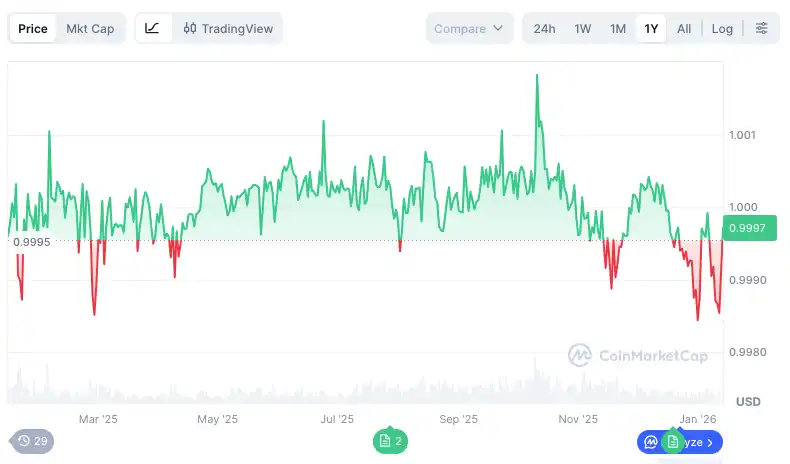
Tether (USDT) to the U.S. Dollar (USD)
-- Price
This content is provided for general informational purposes only and doesn't constitute financial, investment, legal, or tax advice. Any events, rewards, online promotions, or related information mentioned herein should not be considered a recommendation, solicitation, or invitation to purchase, sell, trade, or otherwise deal in any crypto assets. Crypto assets are highly volatile and may result in loss. The availability of WEEX services, products, and related events may vary by region. You are responsible for ensuring that your participation is in accordance with applicable local laws and regulations.
You may also like

Loss of $5,699,22 Due to Weak Recovery Phrase

Address Poisoning Attack Causes $9.4 Million Loss for 15 Victims in 4 Weeks
Rent Tron Energy to Reduce USDT Transaction Fees: TronBid Expands Trading Market

400 Million Accounts: TRON Reaches New Adoption Record

Tron Votes on Proposal to Incorporate Ethereum Functions into Its TVM

Tron Inc. Accumulates 711 Million TRX After Purchasing 144,606 Units

Tron Surpasses 400 Million Active Accounts
TRON Proposes Voting on Proposal No. 107 to Advance TVM Compatibility Upgrade
Mabna Institute Addresses Accumulate $16.8 Million in Receipts
Tron Inc. Expands TRX Treasury To $245M In Nasdaq Corporate Crypto Bet
USDD Launches Vault Feature on Ethereum, Supporting ETH and WBTC Collateral Minting

Tron Accounts Exceed 400 Million

CatFee.io Launches Seamless Energy Service to Simplify TRON On-Chain Transfer Process
Stablecoin Sees $1.6 Billion Net Increase

Judge Keeps Sun's World Liberty Claims In Court
TRON to Initiate TVM Compatibility Upgrade Proposal on August 25

GasFree Supports USDD Payment for Transaction Fees

Tether Denies Building a Dedicated Blockchain; Paolo Ardoino: We Have No Such Plans
Tron Concentrates 95% of Assets in TRX
TRC20-USDT Issuance Surpasses 91.2 Billion, Becoming the Largest USDT Issuance Network Globally

Coinsbuy Loses 7.9 Million Dollars Due to Hack

MoonPay Integrates Gasless Transactions with TRON

Sun Yuchen Speaks at Malaysia Blockchain Week 2026, TRON Becomes the Cornerstone of AI and Finance Integration
TRON (TRX) Daily Signups Rise 42.87% to 230,862

EU adds HTX to Russia sanctions list, barring transactions starting Aug. 23
Institutional Investors Shift Altcoin Evaluation Criteria
Sun Yuchen Attends WikiExpo Hong Kong 2026, TRON Wins AI Payment Infrastructure Award
TRON Institutional: Institutions Holding the Currency Can Stake at Bank

U.S. sanctions four Iran central bank crypto wallets, Tether freezes 131 million USDT
Anchorage Digital launches TRX staking for institutions
Loss of $5,699,22 Due to Weak Recovery Phrase
Address Poisoning Attack Causes $9.4 Million Loss for 15 Victims in 4 Weeks
Rent Tron Energy to Reduce USDT Transaction Fees: TronBid Expands Trading Market
400 Million Accounts: TRON Reaches New Adoption Record
Tron Votes on Proposal to Incorporate Ethereum Functions into Its TVM
Tron Inc. Accumulates 711 Million TRX After Purchasing 144,606 Units


