
Unveiling Kelsier Ventures, a $2 Billion Harvesting "Crab Family"
After the Argentine president briefly endorsed the LIBRA coin, a large interest group around the entire Solana ecosystem MEME coin has sparked significant discussion, with a venture capital firm named Kelsier Ventures emerging.
On the surface, this is a venture capital firm focused on investing in and marketing the Web3 field. In reality, it has been exposed as a carefully orchestrated insider team behind a memecoin project, involved not only in $LIBRA but also deeply engaged in $MELANIA (Melania Trump coin). According to The Big Whale's investigation, Kelsier Ventures also attempted to expand this model to Nigeria, engaging with members of the country's government. According to an informant, "This project has reached a fairly advanced stage." There are also indications that Kelsier Ventures is in talks with other countries, planning to replicate the same memecoin issuance model.
As the Kelsier Ventures scandal continues to unfold, more and more insider trading, fund transfers, and political connections are coming to light. Who is behind this Kelsier Ventures? What is their background? Who else is involved?
The Network of Relationships Behind Kelsier Ventures, the Davis Family
Looking at the official information, Kelsier Ventures' official website (Kelsier.io) introduces itself as driving Web3 innovation through marketing expertise, in-depth research, and targeted investments. They claim to provide support at all stages of a project, from conceptualization to market launch, offering tailored comprehensive support.
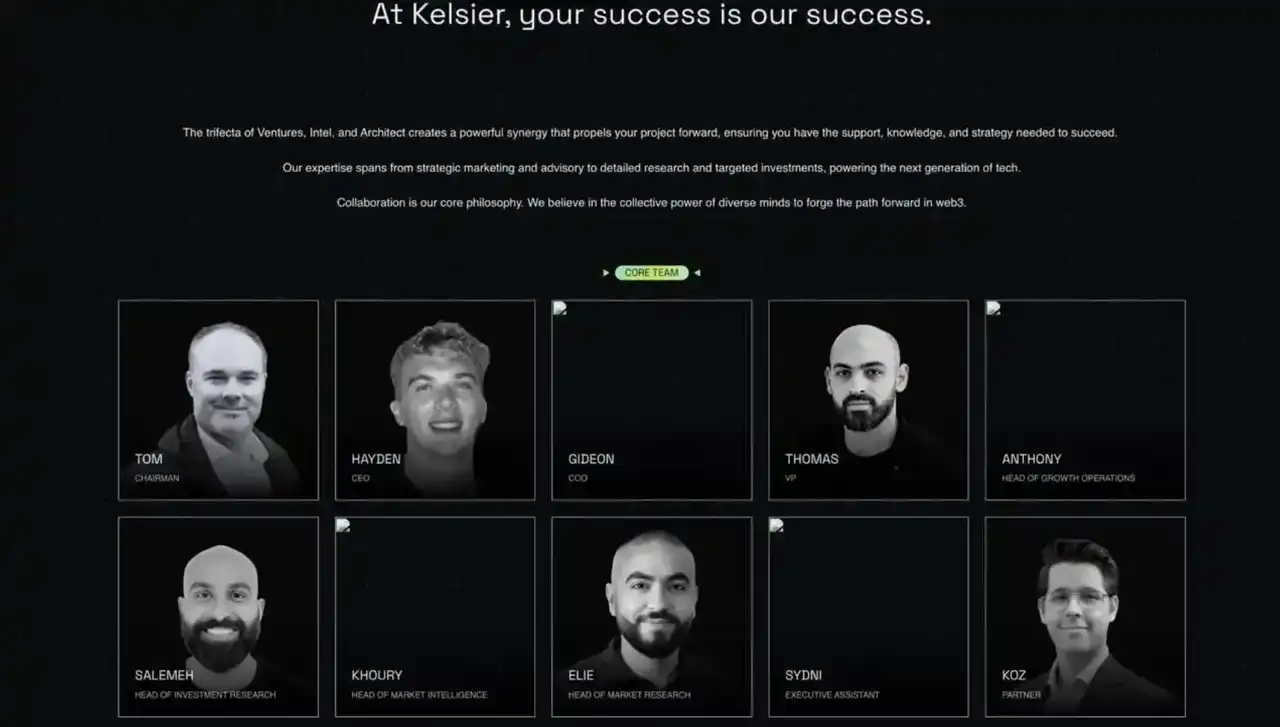
Apparently, after the scandal, their official website has removed much of the previous information, including team member introductions. In screenshots provided by community members, we can see several team members listed, who will be detailed later.
Among various financing news reported by other overseas media, BlockBeats found only three financing pieces of information about this venture:
In May 2024, Kelsier organized a round of financing, raising $3.5 million to support E Money Network, a company focused on asset tokenization and virtual wallet development.
Back in November 2023, Kelsier also participated in the financing of the Bitcoin non-custodial P2P order book service provider Saturn, with Big Brain Holdings leading, and other financing parties including UTXO Management and BOOGLE Syndicate.
The most recent investment was on January 16, 2025, when Kelsier Ventures invested $30,000 in Solana's DEFI protocol Defituna, becoming its second smallest investor. Currently, after the scandal involving Kelsier Ventures, Defituna has refunded the investment.
Now, let's take a look at Kelsier Ventures' team members, a true family business. Hayden Davis serves as CEO, his father Tom Davis as Chairman, and his brother Gideon Davis as COO.

Davis Family Portrait
According to Duozhi BlockBeats, the Davis family seems to have always had a strong commitment to building a family business.
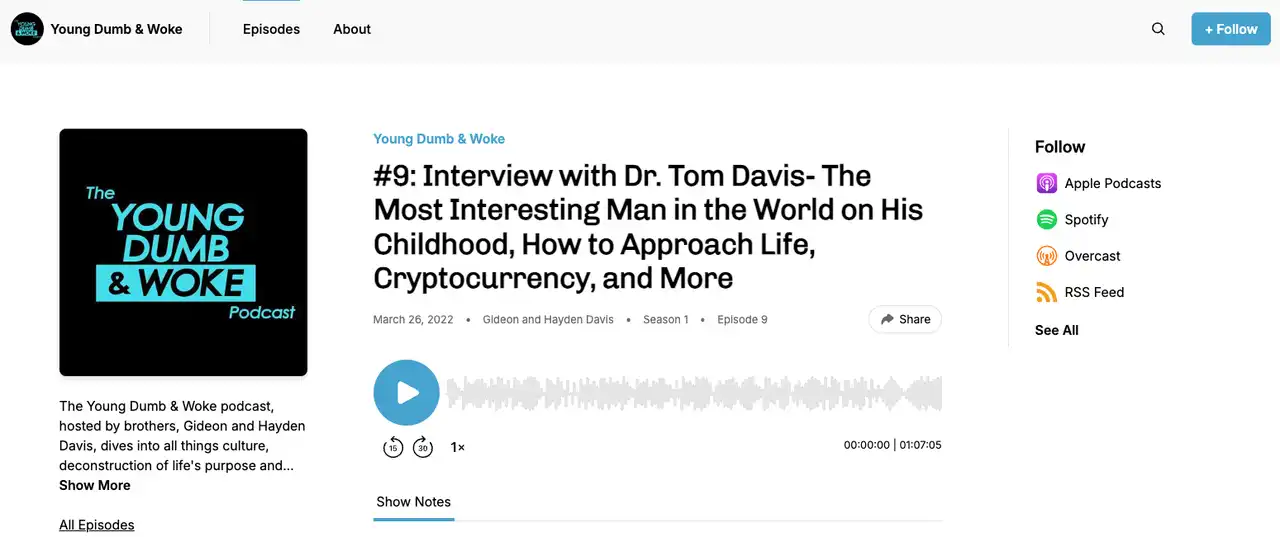
In Episode 9 of the Davis brothers' podcast Young Dumb & Woke, where Hayden Davis and his brother Gideon Davis were interviewed by their father Tom Davis, it was mentioned how thrilled they were to establish a family business.
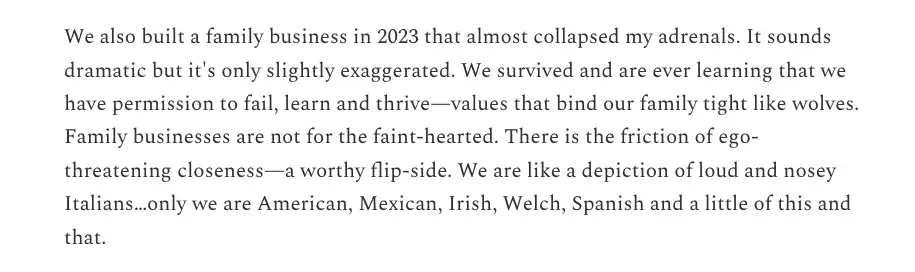
Also, in their mother Emily Chynoweth Davis's blog, she mentioned that "we started a family business in 2023 that allows our family to be like a wolf, tightly bonding our family together," indicating that the family business referred to here is Kelsier Ventures.
Next, let's delve into the details of these key members.
CEO: Hayden Mark
First and foremost is Hayden Mark Davis, the most crucial member of Kelsier Ventures and one of the key proponents of the Argentinian President's Milé Coin LIBRA, who has been a focal point of public attention in recent self-disclosures and interviews.

In a recent interview titled "YouTuber Interviews LIBRA Creator: I Am Also a Victim," Hayden admitted that the team had attempted a "snipe" to rug pull funds, hoping to control market volatility. He insisted that the collapse of LIBRA was a "plan failure" rather than a "rug pull," and the team did not directly profit from the MELANIA token.
Currently, Hayden still holds approximately $100 million in funds. He stated that he is weighing how to handle these funds, with options including refunds, reinjection of funds into the market, or donation to non-profit organizations in Argentina. However, he refused to immediately surrender the funds, believing that as a "custodian," he holds leverage to negotiate with the Argentine government. He stressed that the Milei team did not provide him with any specific instructions, so he must decide the final destination of the funds on his own.
Despite Hayden's self-proclaimed status as a "serial entrepreneur," he is relatively unknown on the Internet, with only 35 contacts on his LinkedIn account.
According to his LinkedIn profile, since October 2020, he has been the CEO of Kelsier, residing in Los Angeles, California, USA; since May of the same year, he became the founder of Luxury Drip, an industry-obscure company (although there is an Italian brand of the same name in the urban fashion sector).

According to Davis, he has been an entrepreneur since August 2017, operating a company called Leaders Elevate. This seems to be another family business of the Davis family, with his father as the main mentor, selling courses and private coaching on leadership topics.
Despite the remarkable difference in weight seen in the photos, it does appear to be the same person:

After Javier Milei uploaded a photo with Hayden Davis, many questions arose about this almost unknown entrepreneur. Searching for the full name Hayden Mark Davis mainly returns news articles related to the collapse of LIBRA.

Hayden's Photo with Mila
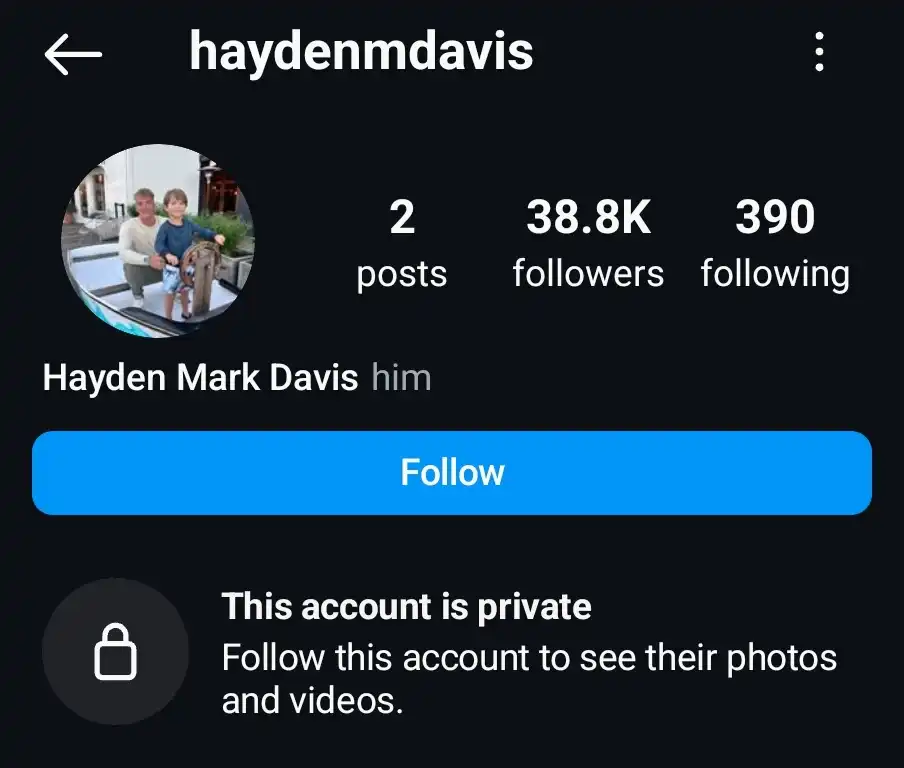
The only other social media activity that can be associated with him is a photo from February 2022 where he appeared with two individuals named Thomas Davis and Gideon Davis, who appeared as co-founders and CEO of Kelsier Ventures, respectively. Very little is known about these two individuals.
Currently, all his private social media accounts have been set to private.
Chairman Dad: Tom
In contrast, the life of their father, Tom Davis, is more dramatic and has more traces on the internet.
In more of Tom's own words, his childhood was not ordinary; his biological father was absent, and his stepfather was an alcoholic military man, leading to a life of abuse. At the age of 18, Tom went through a serious suicide crisis. Later, Tom was targeted by the FBI for identity forgery. Facing the charges, Tom chose to confess everything, even revealing some criminal facts that the FBI had not yet discovered. This thorough honesty shocked the investigators, and in the end, he was sentenced to one year in federal prison instead of the expected 60 to 70 years.
After serving his sentence, Tom restarted his life. He became a youth pastor and actively engaged in charity work. Tom Davis wears many hats—he is an entrepreneur, speaker, author, humanitarian, and served as CEO of Children's HopeChest for 15 years. This is a charity focused on helping orphans and widows globally. However, he later stopped this work and founded an online course called Leaders Elevate, aimed at cultivating the personal growth and development of leaders.
Aside from charity work, he has authored five published books, including: Fields of the Fatherless, Red Letters, Confessions of a Good Christian Guy, and two novels, Scared: A Novel on the Edge of the World and Priceless. Additionally, he has published articles in 25 national publications and is currently working on his doctoral dissertation, researching the influence of positive psychology on dynamic team structures.
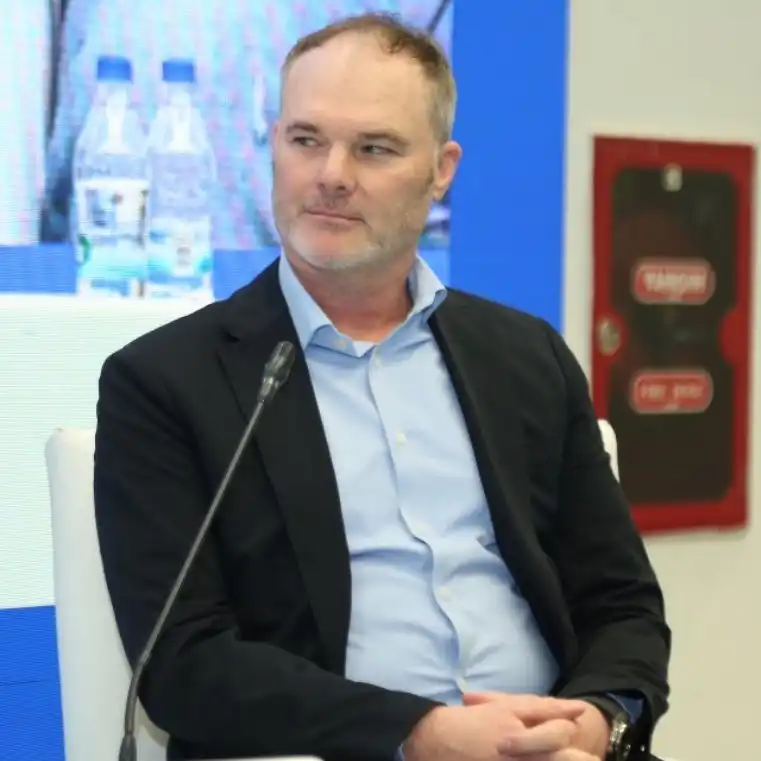
As mentioned earlier, in Episode 9 of the brother-duo podcast "Young Dumb & Woke" hosted by Hayden Davis and his brother Gideon Davis, the brothers interviewed their father Tom Davis, where he shared how he entered the cryptocurrency industry:
As one of the three partners of a chain of restaurants on the East Coast of the United States, his chain brand operated 34 restaurants along the East Coast. Seeking a broader market, he decided to expand his business to the Middle East and registered a company in Dubai.
During his time in Dubai, Tom came across an article about Dubai's plans to establish the world's third "Crypto Valley." Similar Crypto Valleys had already been established in Switzerland and Malaysia, aiming to attract companies in the blockchain, digital asset, and cryptocurrency industries through tax incentives and innovation policies. The article inspired him and sparked the idea of founding a blockchain company in Dubai, which he swiftly acted upon.
Soon enough, Tom delved deep into the cryptocurrency industry. He not only actively participated in related conferences but also successfully launched his own cryptocurrency project (Tom did not disclose the specific project name). Additionally, he began networking with key figures in the field, ventured into venture capital funds, and invested in several early-stage projects. Today, these investments have not only made him a part of the industry but have also secured him leadership positions in some projects.
Although Tom has removed much of his information related to Kelsier Ventures, we can still trace some traces of his past. Initially, Tom also referred to himself as the CEO of Kelsier Ventures.
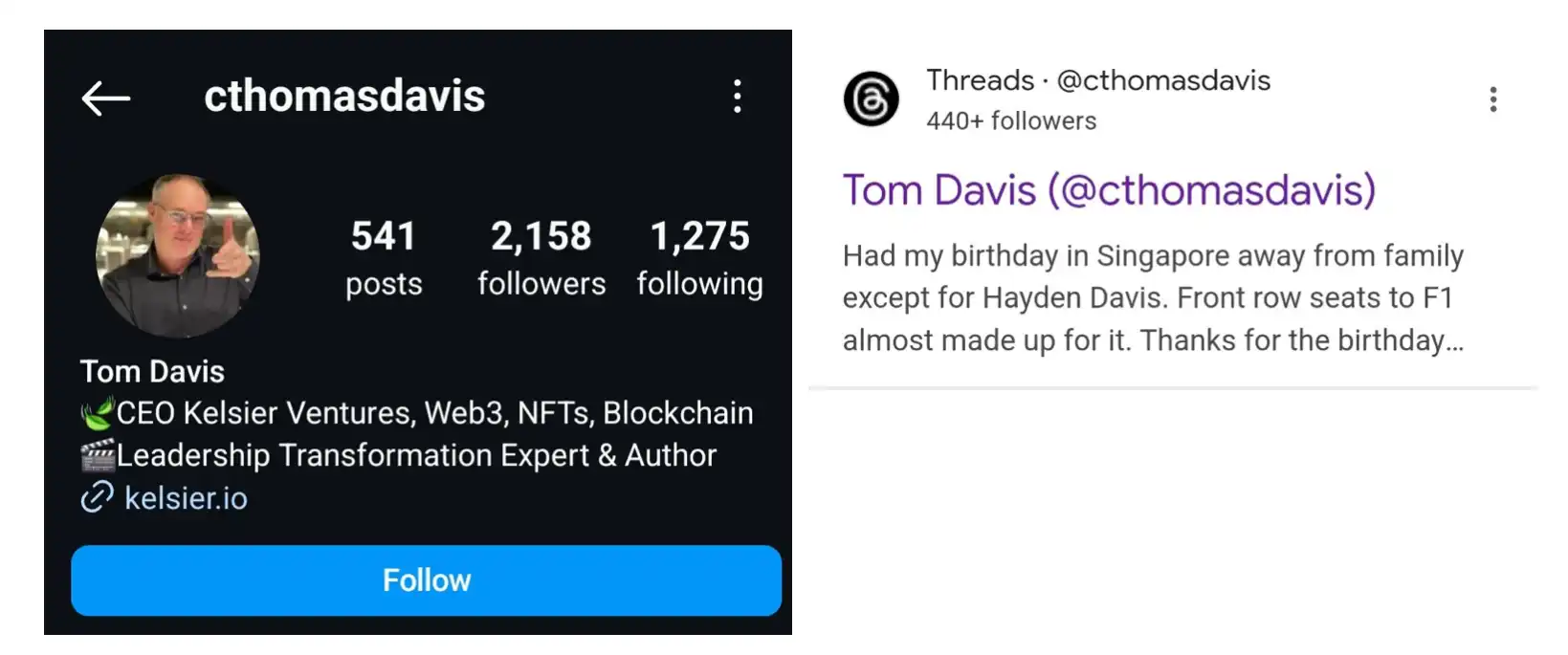
More direct evidence surfaced in the final 10 minutes of this podcast episode, where Tom finally mentioned Kelsier Ventures: "What excites me even more is that this venture is not just mine but a family business."
This has been his vision all along – to build an "empire" with his sons, much like House Teck. Today, this dream is gradually materializing. He and his family have collectively entered the cryptocurrency industry, and while their fund has not yet reached the scale of a global top-tier hedge fund, they have been able to participate in some significant projects in Dubai. Today, Tom is officially a resident of Dubai.
COO Brother: Gideon
Next up is Hayden's brother, Gideon Davis. Within the family business of Kelsier Ventures, Gideon Davis serves as the Chief Operating Officer (COO), overseeing the company's day-to-day operations and investment management.

Although his public information is relatively scarce, glimpses of his involvement in the crypto industry can be pieced together through social media breadcrumbs and past podcast records. In 2022, Gideon was still a junior in college, but had already started delving into the crypto industry, working on the DeFi project Unlock and its metaverse project NeoNexus.
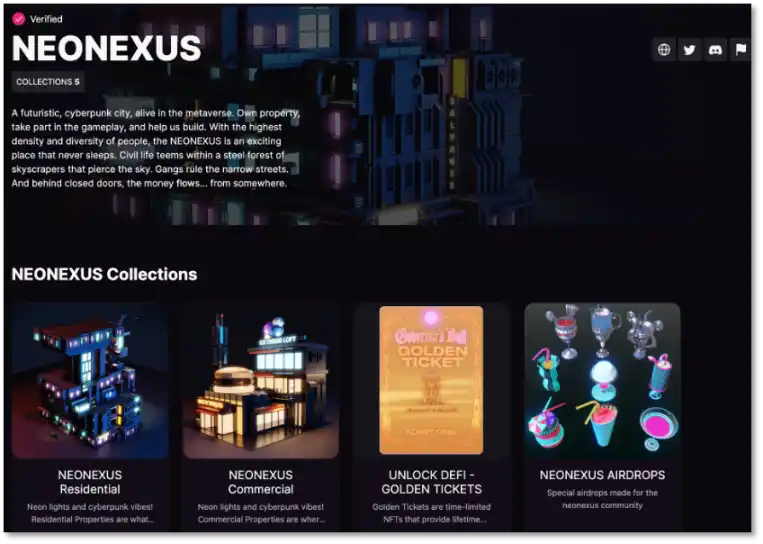
NeoNexus NFT Series
NeoNexus is a metaverse project built on the Solana blockchain, aiming to offer virtual real estate, characters, vehicles, and accessories NFTs, along with a governance token system. The project once claimed to have sold 4,000 sets of "virtual real estate" NFTs, with plans to release another 6,000 sets of real estate-themed NFTs and introduce corresponding governance and utility tokens.
However, on March 21, 2022, NeoNexus founder Jack Shi suddenly announced the project's cessation of operations due to "insufficient funds" and terminated all employees, stating a willingness to hand over the project to the community.
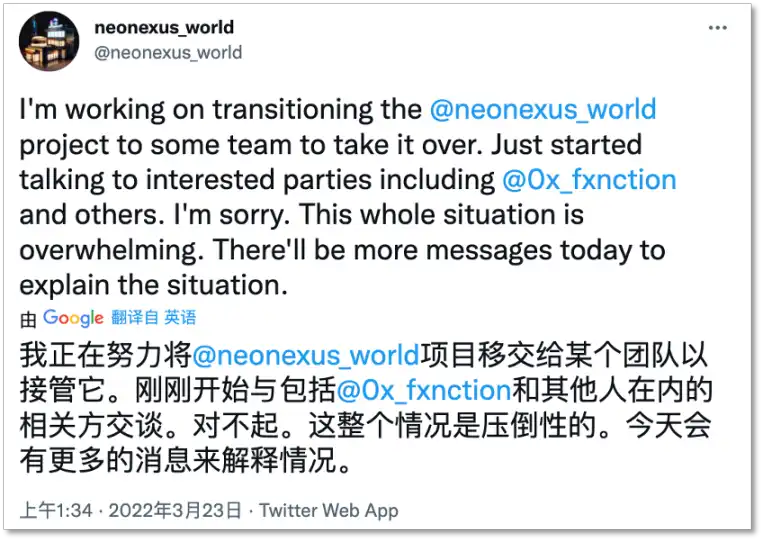
This "soft rug" incident sparked significant scrutiny in the crypto community at the time: it was estimated that since September 2021, NeoNexus had raised approximately 25,000 SOL through NFTs, translating to a fundraising amount between about $3.425 million and $6.475 million based on the SOL price at the time. However, the project suddenly claimed in March 2022 that funds had run out, leading to the inability to continue operations.
Rumors of a Political Network
At this point, while the Davis family all have experience and resources in the crypto industry, it seems that there may still be some "clout" lacking to handle issuing coins for the First Lady of the United States and the President of Argentina.
In a further in-depth investigation by BlockBeats, we uncovered two unconfirmed political relationship web rumors:
1. Hayden's uncle, who is Tom's brother Glen, is a close friend of Trump. Due to this relationship, the Davis family has established a connection with Trump.
2. Another claim is that Hayden's mom, who is Tom's wife Emily Chynoweth Davis, is a close friend of the US President Trump's wife, Melania. The Davis family, through Kelsier Ventures, has previously minted NFT cards for Melania and the $MELANIA coin.

Other Interest Chains
Kelsier Ventures does not operate in isolation; it is part of a deeper interest group. Some of the whistleblowers in the event have revealed many truths to us.
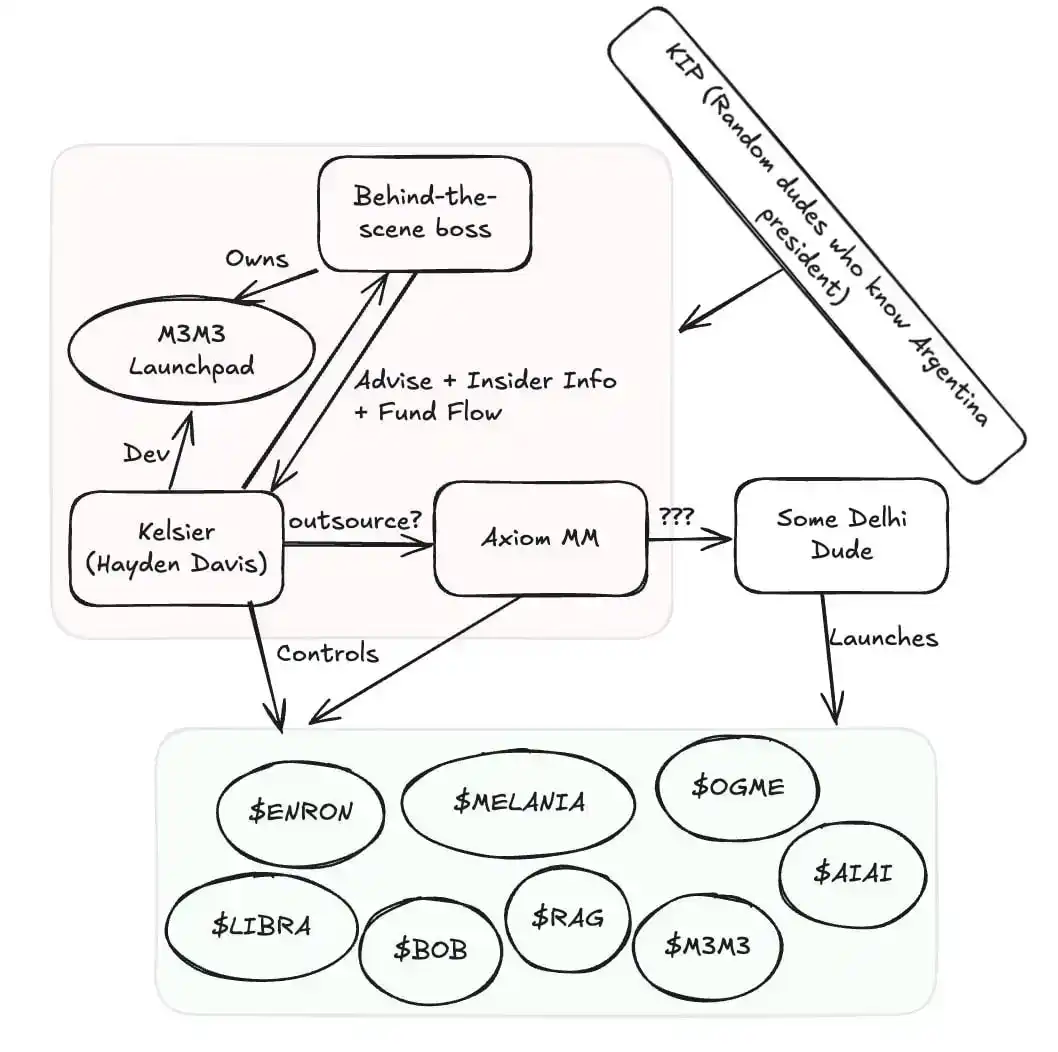
Image Source: Chaofan Shou
According to Chaofan Shou's exposed information, the M3M3 Launchpad is actually a crucial platform used by Kelsier Ventures to manipulate memecoins, becoming a breeding ground for a series of token launches. In the entire operational structure, behind-the-scenes operator Kelsier Ventures is responsible for fund allocation, information disclosure, and deciding when to launch projects, while its CEO Hayden Davis plays the role of developer and executor. Additionally, Axiom MM may act as a market maker or intermediary, ensuring that market liquidity is manipulated to create price fluctuations. The M3M3 Launchpad acts as a "white-glove" platform, assisting numerous memecoin projects such as ENRON, MELANIA, BOB, M3M3, AIAI, LIBRA, etc., in token issuance. More notably, KIP (a group related to the government of Argentine President Milé) may provide political support, sheltering the organization's operations in the Argentine market.
M3M3 Launchpad
The M3M3 Launchpad is a memecoin launch platform that assists in coin launches. At an event, founder of DefiTuna Moty, along with the Solana community, exposed the M3M3 Launchpad. The launchpad pretended to be an independent platform but was actually fully controlled by Meteora co-founder Ben and used by Kelsier Ventures as a tool to manipulate memecoin prices.
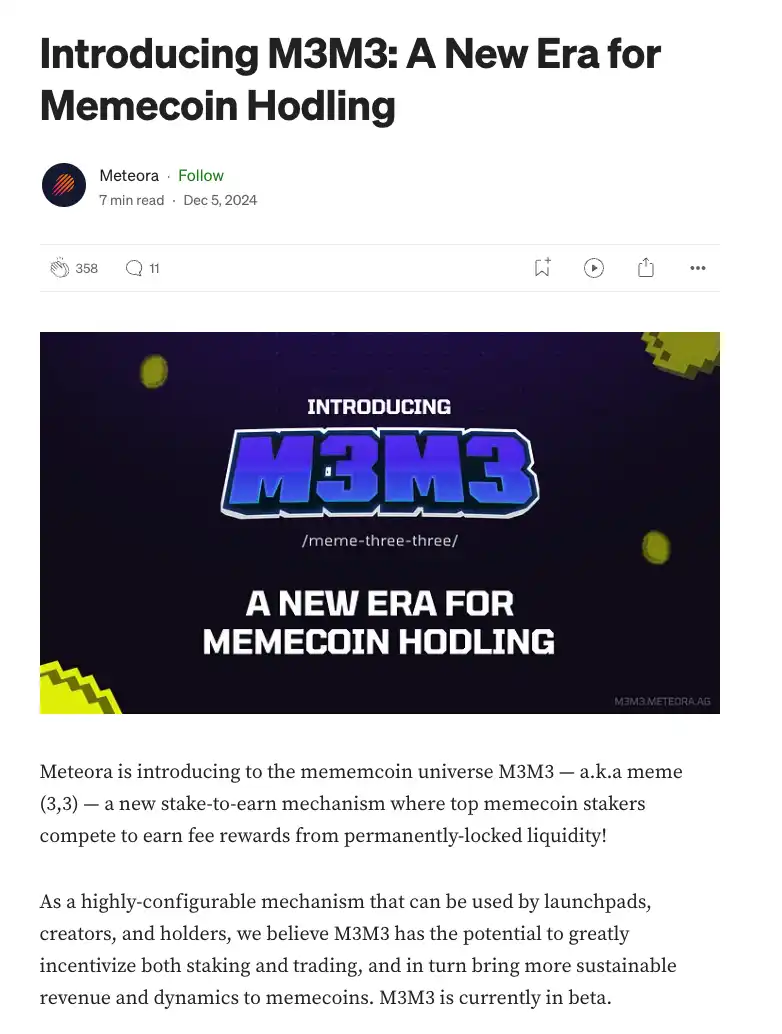
Therefore, it is not difficult to understand that on December 5, 2024, Meteora's blog suddenly introduced the M3M3 Launchpad project.
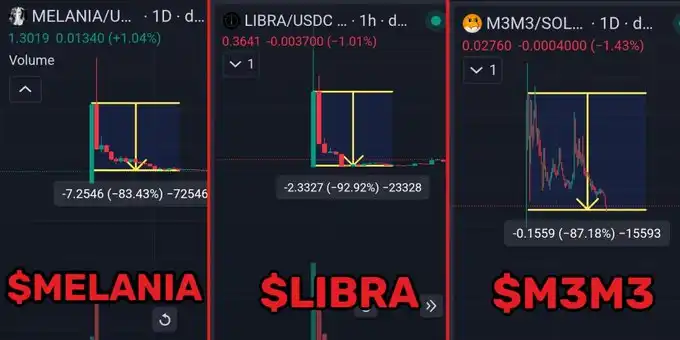
The first token launched by the M3M3 Launchpad was $M3M3. In terms of trend, it was completely replicating the trends of $MELANIA and $LIBARA.
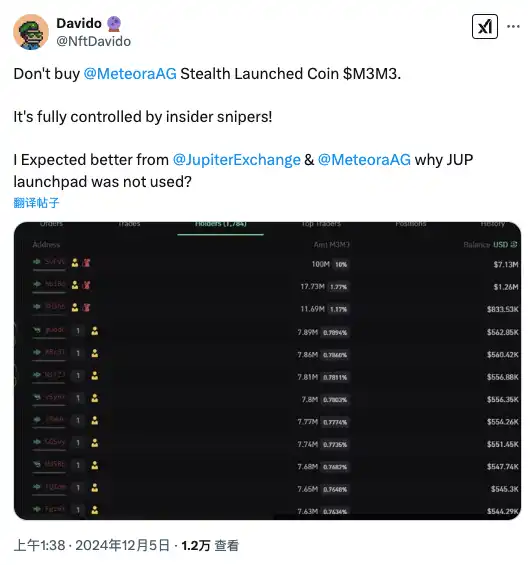
"Do not buy $M3M3! It is completely controlled by insider whales!" Community members had already issued warnings before the insider group was exposed.
In addition, DefiTuna's founder, Moty, revealed that in multiple memecoin projects, over $200 million was siphoned off by insiders, including several tokens launched on the M3M3 Launchpad: $AIAI, $MATES, $ENRON, and others. Projects like $AIAI and $MATES were particularly concerning as their prices plummeted by 95% shortly after listing, leaving community investors empty-handed. Similarly, as the first batch of projects on the memecoin issuance platform, $M3M3 also saw a 95% crash.
With the tokens from these projects, Kelsier Ventures and its manipulation team pocketed over $200 million in profits, as revealed by DefiTuna's founder, Moty.
Initially a DeFi platform, DefiTuna received a $30,000 investment from Kelsier Ventures on January 16, 2025, and through employee Thomas' connection, Kelsier Ventures hoped DefiTuna would provide liquidity for M3M3.
Among the Kelsier Ventures team members mentioned earlier, Thomas is also part of the team and ranks only after Hayden, Tom, and Gideon, indicating his importance and deep involvement.
Under Kelsier's pressure, projects on M3M3 allocated token supply to DefiTuna, with DefiTuna's co-founder Vlad passively participating unaware of the issue. Kelsier further demanded that DefiTuna manage liquidity on M3M3, including the MATES project, which experienced a 95% price crash after listing.
However, as DefiTuna encountered more and more suspicious activities during operation, they realized that M3M3 was not truly a "decentralized launchpad" but rather a tool Kelsier used for market manipulation. The most controversial event occurred during the MELANIA token issuance:
1. Kelsier Leaked Insider Information
Prior to the MELANIA token launch, Kelsier informed DefiTuna that Melania's official X account would tweet about it, and Trump would retweet, helping hype the coin price.
2. Secret Transfer of 1% of Tokens
Kelsier sent 1% of the MELANIA token supply to DefiTuna (worth $100 million at its peak) for "liquidity management."
3. Hayden Davis Instructed Vlad to Conduct Anonymous Sell-Off
Hayden Davis further instructed Vlad to anonymously sell off these tokens to evade on-chain tracing. However, after discussing with DefiTuna's founder Moty, Vlad ultimately decided to refund all the funds.
Currently, DefiTuna has completely severed all cooperation with Kelsier Ventures, refunded Kelsier's $30,000 investment, and publicly accused Kelsier of market manipulation through the M3M3 launchpad and siphoning off significant funds.
Fund Flow: Axiom MM, Cube Exchange Interconnection
In the insider trading network of Kelsier Ventures, the flow of funds is crucial, with Axiom MM and Cube Exchange playing roles in market manipulation, fund washing, and channel distribution. While these projects may not have a direct affiliation with Kelsier on the surface, on-chain data and community leaks reveal their intricate web of vested interests.
Axiom MM is a Market Maker in the Solana ecosystem. In light of DefiTuna founder Moty's accusations and community disclosures, Kelsier Ventures may have used Axiom MM for insider trading and market manipulation: during the launch of $LIBRA, $MELANIA, $M3M3, $AIAI, $MATES, Axiom MM may have been responsible for generating fake trading volume to create a price spike in a short period, attracting retail FOMO; when the behind-the-scenes team decided to cash out, Axiom MM may have adjusted its trading strategy to rapidly drain liquidity from the market, thus accelerating a price collapse.
On-chain data shows that several associated wallets of Axiom MM conducted a series of "suspicious trades" around the $LIBRA launch: minutes before the token went live, they heavily bought $LIBRA, driving up the initial price; during the peak FOMO period, they sold off a significant portion to take profits; on the eve of the token's collapse, they stopped providing liquidity, causing the market depth to vanish instantly.
These actions align closely with typical market manipulation strategies, leading the community to question whether Axiom MM has a conflict of interest with Kelsier Ventures.
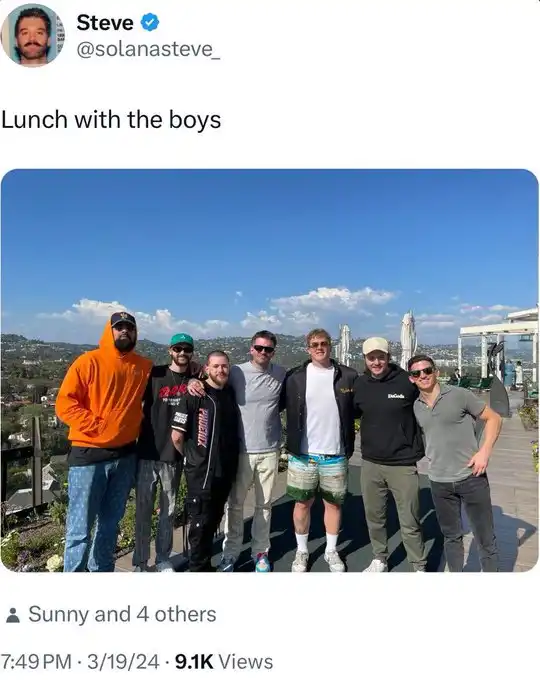
Cube Exchange is also implicated in this scenario. Community investigations revealed that Cube Exchange is a client of Kelsier. Kelsier provides consulting, marketing, and KOL resources to Cube Exchange; Hayden Davis (Kelsier CEO) was an early investor in Cube Exchange; multiple Kelsier-associated wallets engaged in large transactions on Cube Exchange.
"Most people in the photo have either worked at Cube Exchange or have had some sort of affiliation. Cube Exchange is a client of Kelsier, responsible for consulting, marketing, KOLs, and more. But I am not sure if they are directly involved in any misconduct," a community member disclosed.
Furthermore, BOOGLE is also implicated in the events. BOOGLE is a ghost-themed NFT project built on Solana with a total supply of only 100.
However, three members involved in the events all own BOOGLE and have it as their Twitter profile picture. In addition to this, as mentioned earlier, Kelsier participated with BOOGLE in funding the Bitcoin non-custodial P2P order book service provider Saturn. Consequently, with the exposure of the Kelsier event, community members are beginning to question whether BOOGLE provided cover for insider trading or if there are also ties between them.
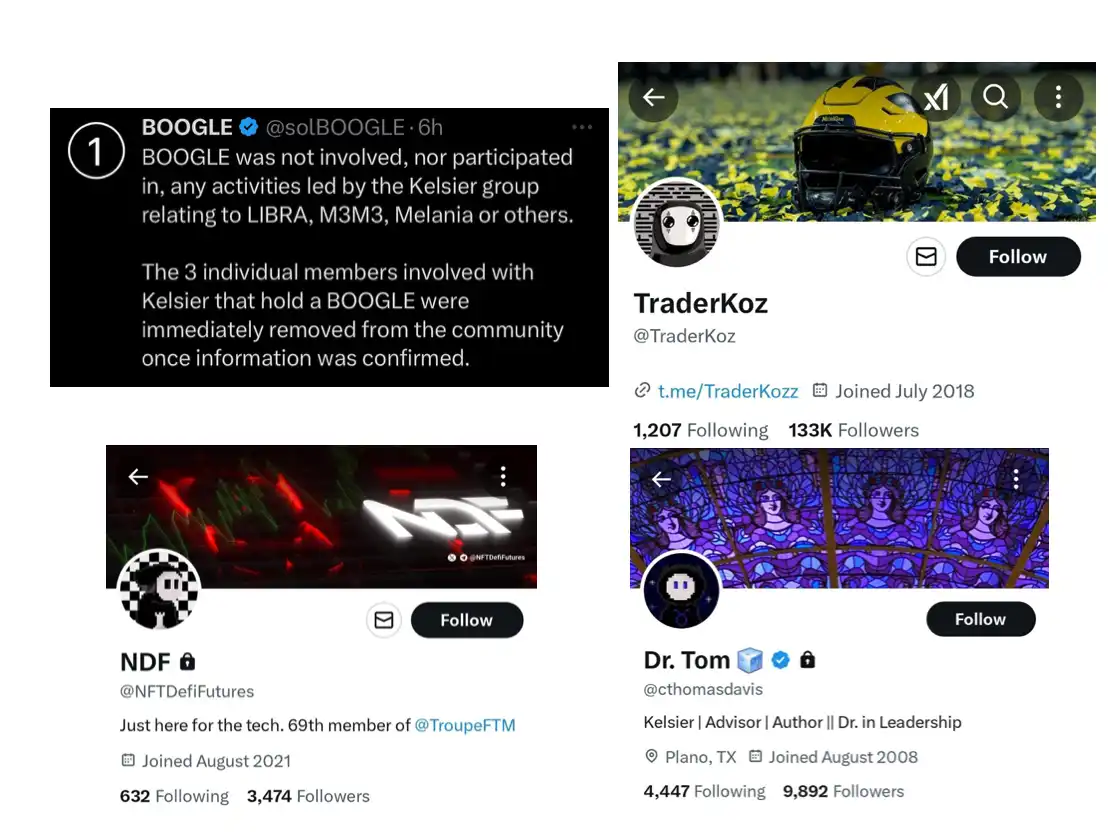
However, the conspiracy has been denied by BOOGLE, stating: "Our shadowy organization is not involved with Kelsier or $LIBRA." They did acknowledge that three Kelsier-related members were previously NFT holders and have since been removed.
The Deep Collusion of Meteora & Jupiter
In the accusation made by the founder of DefiTuna, Meteora and Jupiter are believed to be a deeper interest group outside of Kelsier Ventures, deeply intertwined. The following is the founder of DefiTuna, Moty's exposé and other community members' speculation:
In a series of memecoin manipulation events, Meteora was not an innocent third party but a key partner of Kelsier.
Ben Chow himself was heavily involved in Kelsier's M3M3 Launchpad, despite publicly stating that the platform was "independent," the actual control always remained in the hands of Meteora and its founding team.
In projects such as $LIBRA, $MELANIA, and other memecoin projects, Meteora provided crucial liquidity management, technical support, and aided Kelsier in market manipulation. For example, during multiple memecoin launches on the M3M3 Launchpad, Meteora ensured that most of the tokens flowed into the hands of insiders, leaving retail investors as the victims.
Reportedly, Meteora was founded by Ben Chow and later acquired by Jupiter. Public records indicate that Ben Chow is also a co-founder of Jupiter, and the two are co-founders together.
Additionally, KOL @Ed_x0101 also tweeted that he has sold all his $JUP holdings on X (Twitter) due to several reasons: many memecoin projects that exploit retail investors have direct or indirect ties to Jupiter; Jupiter may be involved in insider trading and market manipulation, potentially facing legal risks; after the collapse of $LIBRA, insiders were compensated while ordinary retail investors lost everything.
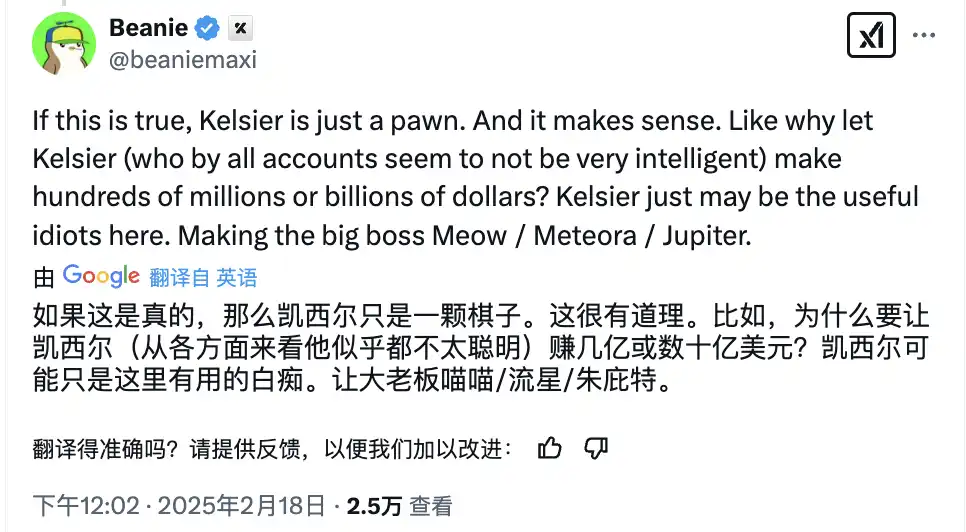
More importantly, many community members pointed out that Kelsier may only be a "white glove," and the real mastermind behind the scenes is the Jupiter team and the liquidity management organization.
As the scandal unfolded, Ben Chow announced his resignation from Meteora on February 17, 2025, and clarified that neither Meteora nor himself ever held, received, or managed any $LIBRA tokens; in the memecoin project, Meteora only provided IT technical support and was not involved in the token's off-chain transactions; there was no "special relationship" with Kelsier, only cooperation during M3M3.
However, this move was perceived by the public as a way to disassociate from the Kelsier incident, attempting to preserve Meteora to prevent regulatory and legal risks from affecting the Jupiter ecosystem.
On the Jupiter side, in response to insider trading issues, an independent third-party law firm, Fenwick & West, was hired to investigate and produce a report.
However, some community members do not trust this law firm because it serves as FTX's general counsel and has been accused of assisting FTX in fraud. It also represents Justin Sun, and a joint disclosure in 2022 mentioned it as "Justin Sun's favorite law firm," previously responsible for the restructuring of Poloniex.
Whether it is Kelsier's manipulation in memecoin issuance, collusion with politicians, market makers, exchanges, it indicates that this is not just a financial scam in the crypto market but may involve broader vested interests.
In this storm, the credibility of the Solana (SOL) ecosystem has been unprecedentedly questioned. On the one hand, Solana, as one of the most popular blockchains since 2024, has rapidly risen due to the prosperity of memecoin trading. On the other hand, whether this prosperity supported by memecoin trading is sustainable in the long term has become a focal point of market discussion.
With a string of "rug pull" projects collapsing, is Solana falling into a trap driven by FOMO funds and lacking substantial application support? If market confidence completely collapses, can SOL once again stage a comeback miracle similar to 2023-2024, overcome the crisis, and achieve market self-repair? BlockBeats will continue to follow up.
You may also like

Token Cannot Compound, Where Is the Real Investment Opportunity?

February 6th Market Key Intelligence, How Much Did You Miss?

China's Central Bank and Eight Other Departments' Latest Regulatory Focus: Key Attention to RWA Tokenized Asset Risk
Foreword: Today, the People's Bank of China's website published the "Notice of the People's Bank of China, National Development and Reform Commission, Ministry of Industry and Information Technology, Ministry of Public Security, State Administration for Market Regulation, China Banking and Insurance Regulatory Commission, China Securities Regulatory Commission, State Administration of Foreign Exchange on Further Preventing and Dealing with Risks Related to Virtual Currency and Others (Yinfa [2026] No. 42)", the latest regulatory requirements from the eight departments including the central bank, which are basically consistent with the regulatory requirements of recent years. The main focus of the regulation is on speculative activities such as virtual currency trading, exchanges, ICOs, overseas platform services, and this time, regulatory oversight of RWA has been added, explicitly prohibiting RWA tokenization, stablecoins (especially those pegged to the RMB). The following is the full text:
To the people's governments of all provinces, autonomous regions, and municipalities directly under the Central Government, the Xinjiang Production and Construction Corps:
Recently, there have been speculative activities related to virtual currency and Real-World Assets (RWA) tokenization, disrupting the economic and financial order and jeopardizing the property security of the people. In order to further prevent and address the risks related to virtual currency and Real-World Assets tokenization, effectively safeguard national security and social stability, in accordance with the "Law of the People's Republic of China on the People's Bank of China," "Law of the People's Republic of China on Commercial Banks," "Securities Law of the People's Republic of China," "Law of the People's Republic of China on Securities Investment Funds," "Law of the People's Republic of China on Futures and Derivatives," "Cybersecurity Law of the People's Republic of China," "Regulations of the People's Republic of China on the Administration of Renminbi," "Regulations on Prevention and Disposal of Illegal Fundraising," "Regulations of the People's Republic of China on Foreign Exchange Administration," "Telecommunications Regulations of the People's Republic of China," and other provisions, after reaching consensus with the Cyberspace Administration of China, the Supreme People's Court, and the Supreme People's Procuratorate, and with the approval of the State Council, the relevant matters are notified as follows:
(I) Virtual currency does not possess the legal status equivalent to fiat currency. Virtual currencies such as Bitcoin, Ether, Tether, etc., have the main characteristics of being issued by non-monetary authorities, using encryption technology and distributed ledger or similar technology, existing in digital form, etc. They do not have legal tender status, should not and cannot be circulated and used as currency in the market.
The business activities related to virtual currency are classified as illegal financial activities. The exchange of fiat currency and virtual currency within the territory, exchange of virtual currencies, acting as a central counterparty in buying and selling virtual currencies, providing information intermediary and pricing services for virtual currency transactions, token issuance financing, and trading of virtual currency-related financial products, etc., fall under illegal financial activities, such as suspected illegal issuance of token vouchers, unauthorized public issuance of securities, illegal operation of securities and futures business, illegal fundraising, etc., are strictly prohibited across the board and resolutely banned in accordance with the law. Overseas entities and individuals are not allowed to provide virtual currency-related services to domestic entities in any form.
A stablecoin pegged to a fiat currency indirectly fulfills some functions of the fiat currency in circulation. Without the consent of relevant authorities in accordance with the law and regulations, any domestic or foreign entity or individual is not allowed to issue a RMB-pegged stablecoin overseas.
(II)Tokenization of Real-World Assets refers to the use of encryption technology and distributed ledger or similar technologies to transform ownership rights, income rights, etc., of assets into tokens (tokens) or other interests or bond certificates with token (token) characteristics, and carry out issuance and trading activities.
Engaging in the tokenization of real-world assets domestically, as well as providing related intermediary, information technology services, etc., which are suspected of illegal issuance of token vouchers, unauthorized public offering of securities, illegal operation of securities and futures business, illegal fundraising, and other illegal financial activities, shall be prohibited; except for relevant business activities carried out with the approval of the competent authorities in accordance with the law and regulations and relying on specific financial infrastructures. Overseas entities and individuals are not allowed to illegally provide services related to the tokenization of real-world assets to domestic entities in any form.
(III) Inter-agency Coordination. The People's Bank of China, together with the National Development and Reform Commission, the Ministry of Industry and Information Technology, the Ministry of Public Security, the State Administration for Market Regulation, the China Banking and Insurance Regulatory Commission, the China Securities Regulatory Commission, the State Administration of Foreign Exchange, and other departments, will improve the work mechanism, strengthen coordination with the Cyberspace Administration of China, the Supreme People's Court, and the Supreme People's Procuratorate, coordinate efforts, and overall guide regions to carry out risk prevention and disposal of virtual currency-related illegal financial activities.
The China Securities Regulatory Commission, together with the National Development and Reform Commission, the Ministry of Industry and Information Technology, the Ministry of Public Security, the People's Bank of China, the State Administration for Market Regulation, the China Banking and Insurance Regulatory Commission, the State Administration of Foreign Exchange, and other departments, will improve the work mechanism, strengthen coordination with the Cyberspace Administration of China, the Supreme People's Court, and the Supreme People's Procuratorate, coordinate efforts, and overall guide regions to carry out risk prevention and disposal of illegal financial activities related to the tokenization of real-world assets.
(IV) Strengthening Local Implementation. The people's governments at the provincial level are overall responsible for the prevention and disposal of risks related to virtual currencies and the tokenization of real-world assets in their respective administrative regions. The specific leading department is the local financial regulatory department, with participation from branches and dispatched institutions of the State Council's financial regulatory department, telecommunications regulators, public security, market supervision, and other departments, in coordination with cyberspace departments, courts, and procuratorates, to improve the normalization of the work mechanism, effectively connect with the relevant work mechanisms of central departments, form a cooperative and coordinated working pattern between central and local governments, effectively prevent and properly handle risks related to virtual currencies and the tokenization of real-world assets, and maintain economic and financial order and social stability.
(5) Enhanced Risk Monitoring. The People's Bank of China, China Securities Regulatory Commission, National Development and Reform Commission, Ministry of Industry and Information Technology, Ministry of Public Security, State Administration of Foreign Exchange, Cyberspace Administration of China, and other departments continue to improve monitoring techniques and system support, enhance cross-departmental data analysis and sharing, establish sound information sharing and cross-validation mechanisms, promptly grasp the risk situation of activities related to virtual currency and real-world asset tokenization. Local governments at all levels give full play to the role of local monitoring and early warning mechanisms. Local financial regulatory authorities, together with branches and agencies of the State Council's financial regulatory authorities, as well as departments of cyberspace and public security, ensure effective connection between online monitoring, offline investigation, and fund tracking, efficiently and accurately identify activities related to virtual currency and real-world asset tokenization, promptly share risk information, improve early warning information dissemination, verification, and rapid response mechanisms.
(6) Strengthened Oversight of Financial Institutions, Intermediaries, and Technology Service Providers. Financial institutions (including non-bank payment institutions) are prohibited from providing account opening, fund transfer, and clearing services for virtual currency-related business activities, issuing and selling financial products related to virtual currency, including virtual currency and related financial products in the scope of collateral, conducting insurance business related to virtual currency, or including virtual currency in the scope of insurance liability. Financial institutions (including non-bank payment institutions) are prohibited from providing custody, clearing, and settlement services for unauthorized real-world asset tokenization-related business and related financial products. Relevant intermediary institutions and information technology service providers are prohibited from providing intermediary, technical, or other services for unauthorized real-world asset tokenization-related businesses and related financial products.
(7) Enhanced Management of Internet Information Content and Access. Internet enterprises are prohibited from providing online business venues, commercial displays, marketing, advertising, or paid traffic diversion services for virtual currency and real-world asset tokenization-related business activities. Upon discovering clues of illegal activities, they should promptly report to relevant departments and provide technical support and assistance for related investigations and inquiries. Based on the clues transferred by the financial regulatory authorities, the cyberspace administration, telecommunications authorities, and public security departments should promptly close and deal with websites, mobile applications (including mini-programs), and public accounts engaged in virtual currency and real-world asset tokenization-related business activities in accordance with the law.
(8) Strengthened Entity Registration and Advertisement Management. Market supervision departments strengthen entity registration and management, and enterprise and individual business registrations must not contain terms such as "virtual currency," "virtual asset," "cryptocurrency," "crypto asset," "stablecoin," "real-world asset tokenization," or "RWA" in their names or business scopes. Market supervision departments, together with financial regulatory authorities, legally enhance the supervision of advertisements related to virtual currency and real-world asset tokenization, promptly investigating and handling relevant illegal advertisements.
(IX) Continued Rectification of Virtual Currency Mining Activities. The National Development and Reform Commission, together with relevant departments, strictly controls virtual currency mining activities, continuously promotes the rectification of virtual currency mining activities. The people's governments of various provinces take overall responsibility for the rectification of "mining" within their respective administrative regions. In accordance with the requirements of the National Development and Reform Commission and other departments in the "Notice on the Rectification of Virtual Currency Mining Activities" (NDRC Energy-saving Building [2021] No. 1283) and the provisions of the "Guidance Catalog for Industrial Structure Adjustment (2024 Edition)," a comprehensive review, investigation, and closure of existing virtual currency mining projects are conducted, new mining projects are strictly prohibited, and mining machine production enterprises are strictly prohibited from providing mining machine sales and other services within the country.
(X) Severe Crackdown on Related Illegal Financial Activities. Upon discovering clues to illegal financial activities related to virtual currency and the tokenization of real-world assets, local financial regulatory authorities, branches of the State Council's financial regulatory authorities, and other relevant departments promptly investigate, determine, and properly handle the issues in accordance with the law, and seriously hold the relevant entities and individuals legally responsible. Those suspected of crimes are transferred to the judicial authorities for processing according to the law.
(XI) Severe Crackdown on Related Illegal and Criminal Activities. The Ministry of Public Security, the People's Bank of China, the State Administration for Market Regulation, the China Banking and Insurance Regulatory Commission, the China Securities Regulatory Commission, as well as judicial and procuratorial organs, in accordance with their respective responsibilities, rigorously crack down on illegal and criminal activities related to virtual currency, the tokenization of real-world assets, such as fraud, money laundering, illegal business operations, pyramid schemes, illegal fundraising, and other illegal and criminal activities carried out under the guise of virtual currency, the tokenization of real-world assets, etc.
(XII) Strengthen Industry Self-discipline. Relevant industry associations should enhance membership management and policy advocacy, based on their own responsibilities, advocate and urge member units to resist illegal financial activities related to virtual currency and the tokenization of real-world assets. Member units that violate regulatory policies and industry self-discipline rules are to be disciplined in accordance with relevant self-regulatory management regulations. By leveraging various industry infrastructure, conduct risk monitoring related to virtual currency, the tokenization of real-world assets, and promptly transfer issue clues to relevant departments.
(XIII) Without the approval of relevant departments in accordance with the law and regulations, domestic entities and foreign entities controlled by them may not issue virtual currency overseas.
(XIV) Domestic entities engaging directly or indirectly in overseas external debt-based tokenization of real-world assets, or conducting asset securitization activities abroad based on domestic ownership rights, income rights, etc. (hereinafter referred to as domestic equity), should be strictly regulated in accordance with the principles of "same business, same risk, same rules." The National Development and Reform Commission, the China Securities Regulatory Commission, the State Administration of Foreign Exchange, and other relevant departments regulate it according to their respective responsibilities. For other forms of overseas real-world asset tokenization activities based on domestic equity by domestic entities, the China Securities Regulatory Commission, together with relevant departments, supervise according to their division of responsibilities. Without the consent and filing of relevant departments, no unit or individual may engage in the above-mentioned business.
(15) Overseas subsidiaries and branches of domestic financial institutions providing Real World Asset Tokenization-related services overseas shall do so legally and prudently. They shall have professional personnel and systems in place to effectively mitigate business risks, strictly implement customer onboarding, suitability management, anti-money laundering requirements, and incorporate them into the domestic financial institutions' compliance and risk management system. Intermediaries and information technology service providers offering Real World Asset Tokenization services abroad based on domestic equity or conducting Real World Asset Tokenization business in the form of overseas debt for domestic entities directly or indirectly venturing abroad must strictly comply with relevant laws and regulations. They should establish and improve relevant compliance and internal control systems in accordance with relevant normative requirements, strengthen business and risk control, and report the business developments to the relevant regulatory authorities for approval or filing.
(16) Strengthen organizational leadership and overall coordination. All departments and regions should attach great importance to the prevention of risks related to virtual currencies and Real World Asset Tokenization, strengthen organizational leadership, clarify work responsibilities, form a long-term effective working mechanism with centralized coordination, local implementation, and shared responsibilities, maintain high pressure, dynamically monitor risks, effectively prevent and mitigate risks in an orderly and efficient manner, legally protect the property security of the people, and make every effort to maintain economic and financial order and social stability.
(17) Widely carry out publicity and education. All departments, regions, and industry associations should make full use of various media and other communication channels to disseminate information through legal and policy interpretation, analysis of typical cases, and education on investment risks, etc. They should promote the illegality and harm of virtual currencies and Real World Asset Tokenization-related businesses and their manifestations, fully alert to potential risks and hidden dangers, and enhance public awareness and identification capabilities for risk prevention.
(18) Engaging in illegal financial activities related to virtual currencies and Real World Asset Tokenization in violation of this notice, as well as providing services for virtual currencies and Real World Asset Tokenization-related businesses, shall be punished in accordance with relevant regulations. If it constitutes a crime, criminal liability shall be pursued according to the law. For domestic entities and individuals who knowingly or should have known that overseas entities illegally provided virtual currency or Real World Asset Tokenization-related services to domestic entities and still assisted them, relevant responsibilities shall be pursued according to the law. If it constitutes a crime, criminal liability shall be pursued according to the law.
(19) If any unit or individual invests in virtual currencies, Real World Asset Tokens, and related financial products against public order and good customs, the relevant civil legal actions shall be invalid, and any resulting losses shall be borne by them. If there are suspicions of disrupting financial order and jeopardizing financial security, the relevant departments shall deal with them according to the law.
This notice shall enter into force upon the date of its issuance. The People's Bank of China and ten other departments' "Notice on Further Preventing and Dealing with the Risks of Virtual Currency Trading Speculation" (Yinfa [2021] No. 237) is hereby repealed.

Former Partner's Perspective on Multicoin: Kyle's Exit, But the Game He Left Behind Just Getting Started
Why Bitcoin Is Falling Now: The Real Reasons Behind BTC's Crash & WEEX's Smart Profit Playbook
Bitcoin's ongoing crash explained: Discover the 5 hidden triggers behind BTC's plunge & how WEEX's Auto Earn and Trade to Earn strategies help traders profit from crypto market volatility.

Wall Street's Hottest Trades See Exodus

Vitalik Discusses Ethereum Scaling Path, Circle Announces Partnership with Polymarket, What's the Overseas Crypto Community Talking About Today?

Believing in the Capital Markets - The Essence and Core Value of Cryptocurrency

Polymarket's 'Weatherman': Predict Temperature, Win Million-Dollar Payout
$15K+ Profits: The 4 AI Trading Secrets WEEX Hackathon Prelim Winners Used to Dominate Volatile Crypto Markets
How WEEX Hackathon's top AI trading strategies made $15K+ in crypto markets: 4 proven rules for ETH/BTC trading, market structure analysis, and risk management in volatile conditions.

A nearly 20% one-day plunge, how long has it been since you last saw a $60,000 Bitcoin?

Raoul Pal: I've seen every single panic, and they are never the end.

Key Market Information Discrepancy on February 6th - A Must-Read! | Alpha Morning Report

2026 Crypto Industry's First Snowfall

The Harsh Reality Behind the $26 Billion Crypto Liquidation: Liquidity Is Killing the Market

Why Is Gold, US Stocks, Bitcoin All Falling?

Key Market Intelligence for February 5th, how much did you miss out on?

Wintermute: By 2026, crypto had gradually become the settlement layer of the Internet economy
Token Cannot Compound, Where Is the Real Investment Opportunity?
February 6th Market Key Intelligence, How Much Did You Miss?
China's Central Bank and Eight Other Departments' Latest Regulatory Focus: Key Attention to RWA Tokenized Asset Risk
Foreword: Today, the People's Bank of China's website published the "Notice of the People's Bank of China, National Development and Reform Commission, Ministry of Industry and Information Technology, Ministry of Public Security, State Administration for Market Regulation, China Banking and Insurance Regulatory Commission, China Securities Regulatory Commission, State Administration of Foreign Exchange on Further Preventing and Dealing with Risks Related to Virtual Currency and Others (Yinfa [2026] No. 42)", the latest regulatory requirements from the eight departments including the central bank, which are basically consistent with the regulatory requirements of recent years. The main focus of the regulation is on speculative activities such as virtual currency trading, exchanges, ICOs, overseas platform services, and this time, regulatory oversight of RWA has been added, explicitly prohibiting RWA tokenization, stablecoins (especially those pegged to the RMB). The following is the full text:
To the people's governments of all provinces, autonomous regions, and municipalities directly under the Central Government, the Xinjiang Production and Construction Corps:
Recently, there have been speculative activities related to virtual currency and Real-World Assets (RWA) tokenization, disrupting the economic and financial order and jeopardizing the property security of the people. In order to further prevent and address the risks related to virtual currency and Real-World Assets tokenization, effectively safeguard national security and social stability, in accordance with the "Law of the People's Republic of China on the People's Bank of China," "Law of the People's Republic of China on Commercial Banks," "Securities Law of the People's Republic of China," "Law of the People's Republic of China on Securities Investment Funds," "Law of the People's Republic of China on Futures and Derivatives," "Cybersecurity Law of the People's Republic of China," "Regulations of the People's Republic of China on the Administration of Renminbi," "Regulations on Prevention and Disposal of Illegal Fundraising," "Regulations of the People's Republic of China on Foreign Exchange Administration," "Telecommunications Regulations of the People's Republic of China," and other provisions, after reaching consensus with the Cyberspace Administration of China, the Supreme People's Court, and the Supreme People's Procuratorate, and with the approval of the State Council, the relevant matters are notified as follows:
(I) Virtual currency does not possess the legal status equivalent to fiat currency. Virtual currencies such as Bitcoin, Ether, Tether, etc., have the main characteristics of being issued by non-monetary authorities, using encryption technology and distributed ledger or similar technology, existing in digital form, etc. They do not have legal tender status, should not and cannot be circulated and used as currency in the market.
The business activities related to virtual currency are classified as illegal financial activities. The exchange of fiat currency and virtual currency within the territory, exchange of virtual currencies, acting as a central counterparty in buying and selling virtual currencies, providing information intermediary and pricing services for virtual currency transactions, token issuance financing, and trading of virtual currency-related financial products, etc., fall under illegal financial activities, such as suspected illegal issuance of token vouchers, unauthorized public issuance of securities, illegal operation of securities and futures business, illegal fundraising, etc., are strictly prohibited across the board and resolutely banned in accordance with the law. Overseas entities and individuals are not allowed to provide virtual currency-related services to domestic entities in any form.
A stablecoin pegged to a fiat currency indirectly fulfills some functions of the fiat currency in circulation. Without the consent of relevant authorities in accordance with the law and regulations, any domestic or foreign entity or individual is not allowed to issue a RMB-pegged stablecoin overseas.
(II)Tokenization of Real-World Assets refers to the use of encryption technology and distributed ledger or similar technologies to transform ownership rights, income rights, etc., of assets into tokens (tokens) or other interests or bond certificates with token (token) characteristics, and carry out issuance and trading activities.
Engaging in the tokenization of real-world assets domestically, as well as providing related intermediary, information technology services, etc., which are suspected of illegal issuance of token vouchers, unauthorized public offering of securities, illegal operation of securities and futures business, illegal fundraising, and other illegal financial activities, shall be prohibited; except for relevant business activities carried out with the approval of the competent authorities in accordance with the law and regulations and relying on specific financial infrastructures. Overseas entities and individuals are not allowed to illegally provide services related to the tokenization of real-world assets to domestic entities in any form.
(III) Inter-agency Coordination. The People's Bank of China, together with the National Development and Reform Commission, the Ministry of Industry and Information Technology, the Ministry of Public Security, the State Administration for Market Regulation, the China Banking and Insurance Regulatory Commission, the China Securities Regulatory Commission, the State Administration of Foreign Exchange, and other departments, will improve the work mechanism, strengthen coordination with the Cyberspace Administration of China, the Supreme People's Court, and the Supreme People's Procuratorate, coordinate efforts, and overall guide regions to carry out risk prevention and disposal of virtual currency-related illegal financial activities.
The China Securities Regulatory Commission, together with the National Development and Reform Commission, the Ministry of Industry and Information Technology, the Ministry of Public Security, the People's Bank of China, the State Administration for Market Regulation, the China Banking and Insurance Regulatory Commission, the State Administration of Foreign Exchange, and other departments, will improve the work mechanism, strengthen coordination with the Cyberspace Administration of China, the Supreme People's Court, and the Supreme People's Procuratorate, coordinate efforts, and overall guide regions to carry out risk prevention and disposal of illegal financial activities related to the tokenization of real-world assets.
(IV) Strengthening Local Implementation. The people's governments at the provincial level are overall responsible for the prevention and disposal of risks related to virtual currencies and the tokenization of real-world assets in their respective administrative regions. The specific leading department is the local financial regulatory department, with participation from branches and dispatched institutions of the State Council's financial regulatory department, telecommunications regulators, public security, market supervision, and other departments, in coordination with cyberspace departments, courts, and procuratorates, to improve the normalization of the work mechanism, effectively connect with the relevant work mechanisms of central departments, form a cooperative and coordinated working pattern between central and local governments, effectively prevent and properly handle risks related to virtual currencies and the tokenization of real-world assets, and maintain economic and financial order and social stability.
(5) Enhanced Risk Monitoring. The People's Bank of China, China Securities Regulatory Commission, National Development and Reform Commission, Ministry of Industry and Information Technology, Ministry of Public Security, State Administration of Foreign Exchange, Cyberspace Administration of China, and other departments continue to improve monitoring techniques and system support, enhance cross-departmental data analysis and sharing, establish sound information sharing and cross-validation mechanisms, promptly grasp the risk situation of activities related to virtual currency and real-world asset tokenization. Local governments at all levels give full play to the role of local monitoring and early warning mechanisms. Local financial regulatory authorities, together with branches and agencies of the State Council's financial regulatory authorities, as well as departments of cyberspace and public security, ensure effective connection between online monitoring, offline investigation, and fund tracking, efficiently and accurately identify activities related to virtual currency and real-world asset tokenization, promptly share risk information, improve early warning information dissemination, verification, and rapid response mechanisms.
(6) Strengthened Oversight of Financial Institutions, Intermediaries, and Technology Service Providers. Financial institutions (including non-bank payment institutions) are prohibited from providing account opening, fund transfer, and clearing services for virtual currency-related business activities, issuing and selling financial products related to virtual currency, including virtual currency and related financial products in the scope of collateral, conducting insurance business related to virtual currency, or including virtual currency in the scope of insurance liability. Financial institutions (including non-bank payment institutions) are prohibited from providing custody, clearing, and settlement services for unauthorized real-world asset tokenization-related business and related financial products. Relevant intermediary institutions and information technology service providers are prohibited from providing intermediary, technical, or other services for unauthorized real-world asset tokenization-related businesses and related financial products.
(7) Enhanced Management of Internet Information Content and Access. Internet enterprises are prohibited from providing online business venues, commercial displays, marketing, advertising, or paid traffic diversion services for virtual currency and real-world asset tokenization-related business activities. Upon discovering clues of illegal activities, they should promptly report to relevant departments and provide technical support and assistance for related investigations and inquiries. Based on the clues transferred by the financial regulatory authorities, the cyberspace administration, telecommunications authorities, and public security departments should promptly close and deal with websites, mobile applications (including mini-programs), and public accounts engaged in virtual currency and real-world asset tokenization-related business activities in accordance with the law.
(8) Strengthened Entity Registration and Advertisement Management. Market supervision departments strengthen entity registration and management, and enterprise and individual business registrations must not contain terms such as "virtual currency," "virtual asset," "cryptocurrency," "crypto asset," "stablecoin," "real-world asset tokenization," or "RWA" in their names or business scopes. Market supervision departments, together with financial regulatory authorities, legally enhance the supervision of advertisements related to virtual currency and real-world asset tokenization, promptly investigating and handling relevant illegal advertisements.
(IX) Continued Rectification of Virtual Currency Mining Activities. The National Development and Reform Commission, together with relevant departments, strictly controls virtual currency mining activities, continuously promotes the rectification of virtual currency mining activities. The people's governments of various provinces take overall responsibility for the rectification of "mining" within their respective administrative regions. In accordance with the requirements of the National Development and Reform Commission and other departments in the "Notice on the Rectification of Virtual Currency Mining Activities" (NDRC Energy-saving Building [2021] No. 1283) and the provisions of the "Guidance Catalog for Industrial Structure Adjustment (2024 Edition)," a comprehensive review, investigation, and closure of existing virtual currency mining projects are conducted, new mining projects are strictly prohibited, and mining machine production enterprises are strictly prohibited from providing mining machine sales and other services within the country.
(X) Severe Crackdown on Related Illegal Financial Activities. Upon discovering clues to illegal financial activities related to virtual currency and the tokenization of real-world assets, local financial regulatory authorities, branches of the State Council's financial regulatory authorities, and other relevant departments promptly investigate, determine, and properly handle the issues in accordance with the law, and seriously hold the relevant entities and individuals legally responsible. Those suspected of crimes are transferred to the judicial authorities for processing according to the law.
(XI) Severe Crackdown on Related Illegal and Criminal Activities. The Ministry of Public Security, the People's Bank of China, the State Administration for Market Regulation, the China Banking and Insurance Regulatory Commission, the China Securities Regulatory Commission, as well as judicial and procuratorial organs, in accordance with their respective responsibilities, rigorously crack down on illegal and criminal activities related to virtual currency, the tokenization of real-world assets, such as fraud, money laundering, illegal business operations, pyramid schemes, illegal fundraising, and other illegal and criminal activities carried out under the guise of virtual currency, the tokenization of real-world assets, etc.
(XII) Strengthen Industry Self-discipline. Relevant industry associations should enhance membership management and policy advocacy, based on their own responsibilities, advocate and urge member units to resist illegal financial activities related to virtual currency and the tokenization of real-world assets. Member units that violate regulatory policies and industry self-discipline rules are to be disciplined in accordance with relevant self-regulatory management regulations. By leveraging various industry infrastructure, conduct risk monitoring related to virtual currency, the tokenization of real-world assets, and promptly transfer issue clues to relevant departments.
(XIII) Without the approval of relevant departments in accordance with the law and regulations, domestic entities and foreign entities controlled by them may not issue virtual currency overseas.
(XIV) Domestic entities engaging directly or indirectly in overseas external debt-based tokenization of real-world assets, or conducting asset securitization activities abroad based on domestic ownership rights, income rights, etc. (hereinafter referred to as domestic equity), should be strictly regulated in accordance with the principles of "same business, same risk, same rules." The National Development and Reform Commission, the China Securities Regulatory Commission, the State Administration of Foreign Exchange, and other relevant departments regulate it according to their respective responsibilities. For other forms of overseas real-world asset tokenization activities based on domestic equity by domestic entities, the China Securities Regulatory Commission, together with relevant departments, supervise according to their division of responsibilities. Without the consent and filing of relevant departments, no unit or individual may engage in the above-mentioned business.
(15) Overseas subsidiaries and branches of domestic financial institutions providing Real World Asset Tokenization-related services overseas shall do so legally and prudently. They shall have professional personnel and systems in place to effectively mitigate business risks, strictly implement customer onboarding, suitability management, anti-money laundering requirements, and incorporate them into the domestic financial institutions' compliance and risk management system. Intermediaries and information technology service providers offering Real World Asset Tokenization services abroad based on domestic equity or conducting Real World Asset Tokenization business in the form of overseas debt for domestic entities directly or indirectly venturing abroad must strictly comply with relevant laws and regulations. They should establish and improve relevant compliance and internal control systems in accordance with relevant normative requirements, strengthen business and risk control, and report the business developments to the relevant regulatory authorities for approval or filing.
(16) Strengthen organizational leadership and overall coordination. All departments and regions should attach great importance to the prevention of risks related to virtual currencies and Real World Asset Tokenization, strengthen organizational leadership, clarify work responsibilities, form a long-term effective working mechanism with centralized coordination, local implementation, and shared responsibilities, maintain high pressure, dynamically monitor risks, effectively prevent and mitigate risks in an orderly and efficient manner, legally protect the property security of the people, and make every effort to maintain economic and financial order and social stability.
(17) Widely carry out publicity and education. All departments, regions, and industry associations should make full use of various media and other communication channels to disseminate information through legal and policy interpretation, analysis of typical cases, and education on investment risks, etc. They should promote the illegality and harm of virtual currencies and Real World Asset Tokenization-related businesses and their manifestations, fully alert to potential risks and hidden dangers, and enhance public awareness and identification capabilities for risk prevention.
(18) Engaging in illegal financial activities related to virtual currencies and Real World Asset Tokenization in violation of this notice, as well as providing services for virtual currencies and Real World Asset Tokenization-related businesses, shall be punished in accordance with relevant regulations. If it constitutes a crime, criminal liability shall be pursued according to the law. For domestic entities and individuals who knowingly or should have known that overseas entities illegally provided virtual currency or Real World Asset Tokenization-related services to domestic entities and still assisted them, relevant responsibilities shall be pursued according to the law. If it constitutes a crime, criminal liability shall be pursued according to the law.
(19) If any unit or individual invests in virtual currencies, Real World Asset Tokens, and related financial products against public order and good customs, the relevant civil legal actions shall be invalid, and any resulting losses shall be borne by them. If there are suspicions of disrupting financial order and jeopardizing financial security, the relevant departments shall deal with them according to the law.
This notice shall enter into force upon the date of its issuance. The People's Bank of China and ten other departments' "Notice on Further Preventing and Dealing with the Risks of Virtual Currency Trading Speculation" (Yinfa [2021] No. 237) is hereby repealed.
Former Partner's Perspective on Multicoin: Kyle's Exit, But the Game He Left Behind Just Getting Started
Why Bitcoin Is Falling Now: The Real Reasons Behind BTC's Crash & WEEX's Smart Profit Playbook
Bitcoin's ongoing crash explained: Discover the 5 hidden triggers behind BTC's plunge & how WEEX's Auto Earn and Trade to Earn strategies help traders profit from crypto market volatility.
