
 Buy Crypto
- Markets
 Futures
- Spot
- Copy Trade
- Earn
- More
When a Token Becomes Labor, People Become the Interface

Author | Lin Wanwan
In 1876, at the Philadelphia World's Fair, Brazilian Emperor Dom Pedro II picked up Bell's invention, the telephone, heard a voice on the other end, and exclaimed, "My God, it talks!"
One hundred and fifty years later, on March 18, 2026, at the San Jose Convention Center, wearing a black leather jacket, Jen-Hsun Huang stood on the GTC conference stage and also uttered a startling statement.
"In ten years, NVIDIA will probably have around 75,000 employees. They will be very, very busy because they will be working with 7.5 million AI agents."
There was laughter in the audience.
75,000 people, 7.5 million agents, 1:100.
Jen-Hsun Huang chuckled himself and added, "They will work around the clock. Hopefully, our people won't have to compete with them."
The applause subsided, and this number was overshadowed that day by more flashy chip releases and partnership announcements. But if we take a moment to focus on it again, this could possibly be one of the most important statements of the entire conference.
It's not just Jen-Hsun Huang. Three months earlier, another person described the same future in more concrete terms.
In January 2026, at CES in Las Vegas, McKinsey CEO Bob Sternfels sat on stage and presented the numbers.
"We currently have 40,000 human employees and approximately 25,000 AI agents." Less than two years ago, this number was in the thousands. Those 25,000 agents generated 2.5 million charts in the past six months.
2.5 million charts. This used to be the job of newly hired analysts. Twenty-three or twenty-four years old, basking in the glow of a prestigious university, aligning axes at three in the morning.
That was the starting point for every McKinsey newcomer, trading the most mechanical labor for a ticket to the partner track.
Now the first half of that ticket has been taken over by agents. Sternfels said, "AI has led to a 25% growth in some positions and a 25% reduction in others. The company is neatly split in half between expansion and contraction."
The stories of NVIDIA and McKinsey are telling the same tale.
In a 1:100 world, the work is done by Token-driven agents, and people are interfaces connected to these agents.
The Remote Control of Outsourcing is Not in Your Hands
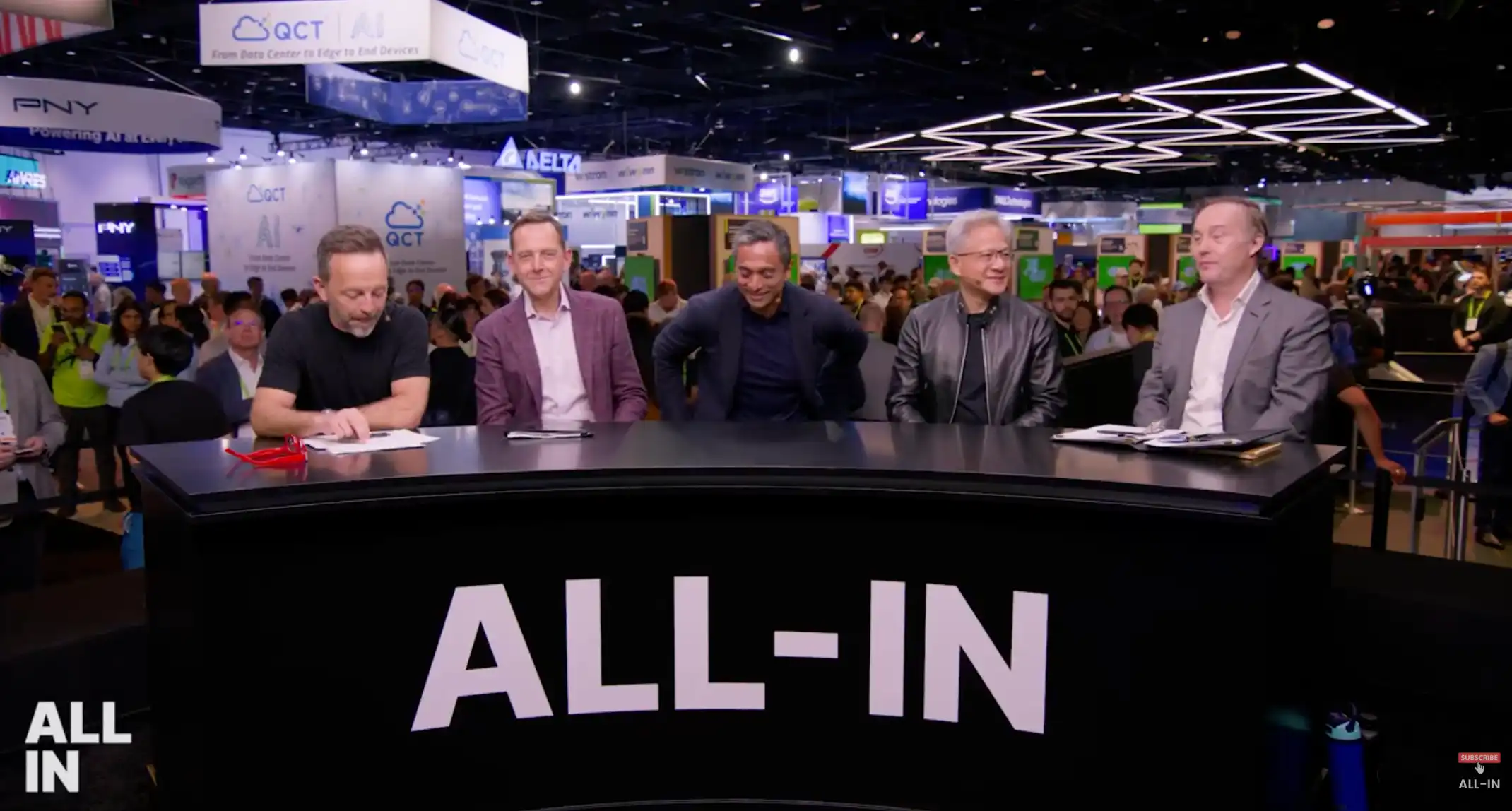
During GTC week, Jensen Huang appeared on the All-In Podcast and delivered an even more striking statement.
“Let's say you have a $500,000 a year engineer. If they haven't consumed at least $250,000 worth of Tokens, I would be very concerned.”
When asked by the host if NVIDIA was spending $2 billion on Tokens for the engineering team, Jensen Huang replied, “We are working on it.”
An engineer who does not burn Tokens is not even worth their $500,000 salary.
NVIDIA's approach is very direct—shove Tokens into the compensation package. Jensen Huang said during the GTC keynote that in the future, every NVIDIA engineer will have an annual Token budget, approximately half of their base salary.
For an engineer with a base salary of tens of thousands of dollars, receiving an additional amount of computation power equivalent to half of their base salary, one-third of their total package is pure fuel.
For someone who maxes out their Token budget, it's like having a dozen AI agents working around the clock to help them write code, run tests, search documents, and perform simulations. Someone with only the free version of an API quota is still relying on their own hands to type on the keyboard. Two people with identical resumes could have a productivity difference of 5 to 10 times.
This is no longer just a theory in Silicon Valley.
In March of this year, Business Insider reported on a shift: engineers are starting to ask during interviews, “How much Token budget is allocated to this position?” Tomasz Tunguz, a partner at Theory Ventures, referred to the Token budget as the “fourth pillar” of engineer compensation, following base salary, bonuses, and equity. Greg Brockman, the President of OpenAI, put it more bluntly: the amount of inference you can access will increasingly determine your overall productivity.
In his GTC speech, Jensen Huang himself said, “How much Token is associated with my role? This has already become a recruiting tool in Silicon Valley.”
In the 1950s, Detroit's autoworkers had some of the highest wages in the United States. What truly enabled them to live a middle-class life was Henry Ford's invention of the assembly line. Workers stood on the line, the line moved while people stayed put, and everyone's output was amplified many times over by robotic arms. A Detroit worker's standard of living far exceeded that of contemporary artisans, whose craftsmanship may not have been superior, but they walked on a broader assembly line.
The 2026 Token Budget is the equivalent of the 1950 assembly line.
But with one key difference.
In Detroit, workers could leave Ford and go to GM, go to Chrysler, the assembly lines were everywhere. Unions could negotiate with management for better line speeds and safer environments.
The Token Budget is different. You're a superhero when they give it to you, back to being ordinary when they take it back. Stocks can be cashed out, skills can follow you when you switch jobs. The Token Budget is nothing, just a cheat code, with the switch controlled by the company.
Silicon Valley already has a word for this situation, called "GPU Thirst".
Top AI researchers switch jobs, the salary gap is now second, with compute power taking the lead. Can't run experiments, can't deploy agents, abilities are capped by quotas. "How many Tokens are you offered" sometimes ranks above stock options. Stocks are like a future check that might fall, the Token Budget is productivity that can be cashed in today.
And those without AI just get eliminated.
Goldman Sachs estimates AI could automate 25% of U.S. work hours. A Mercer survey says 65% of executives expect two to three-tenths of their workforce to be reallocated due to AI. Combine the two sets of numbers, the conclusion is clear: people with Tokens explode in output, those without Tokens get optimized out.
The dividing line is the Token quota, less and less related to a person's skills.
Token Throughput is Valuation
Personal value is determined by the Token quota. But what about companies?
In early March 2026, a Shanghai-based company called MiniMax released its first annual report since going public. Annual revenue was $79 million, with an adjusted net loss of $250 million. By traditional financial measures, this was a cash-burning small company, with revenue only a fraction of Accenture's quarterly numbers.
But the capital markets saw it differently.
MiniMax's CEO Yan Junjie said a sentence during the earnings call, more critical than the entire report: "The company's value is determined by the Intelligence Density multiplied by the Token Throughput."
The Token Throughput, not revenue growth, not user numbers, not gross margins.
The data supporting this statement is very solid. In February 2026, MiniMax's M2 series model's daily Token consumption has increased sixfold compared to two months ago in December. The Token consumption in a programming scenario has increased tenfold. On the AI model aggregation platform OpenRouter, MiniMax's M2.5 has consumed 45.5 trillion Tokens in two weeks, pushing all U.S. models out and propelling a Shanghai-based company to the top of the global Token consumption leaderboard for the first time.
The situation was described by the South China Morning Post with a statement: China's open-source model has ended the year-long market dominance of American developers. What led to the end? Token consumption. Whoever burns the most Tokens is the winner.
This logic also applies to OpenAI. OpenAI's API platform processes 6 billion Tokens per minute, a 20x increase in two years. Enterprise customers spending over $100,000 annually have nearly seen a 7x increase. Barclays analyst Ross Sandler, after dissecting the data, concluded: OpenAI's consumer-side Token consumption is more than double that of Google Gemini.
Token consumption has become the hard currency for ranking AI companies.
Even more interesting is how this plays out internally within companies. A recent New York Times article reported on a phenomenon called "tokenmaxxing": Meta and OpenAI engineers competing on internal leaderboards to see who can consume the most Tokens.
Token budget is becoming a standardized benefit, much like free lunches and dental insurance a decade ago. An engineer working at Ericsson's Stockholm office told the New York Times that his spending on Claude might be higher than his salary, but the company foots the bill.
A recent article on TechCrunch did the math: An engineer might consume 10,000 Tokens writing an article in the afternoon, but an engineer running an agent cluster can burn millions of Tokens in the background in a day without typing a single word.
Two years ago, the price per million Tokens was $33. Now, it's 9 cents. That's a 99.7% drop. The cheaper the price, the more intense the burning. The more intense the burning, the harder to detach.
Yan Junjie's prediction on the conference call was: The future market demand for Tokens may increase by one to two orders of magnitude.
This is the new way companies are being valued in 2026. It's not about how much money you're making, it's about how much your Token has been burned. MiniMax took a 2.5 billion hit, but the steep growth curve of Token throughput was enough to pique the interest of the capital markets. You can think of it like YouTube in 2006, with no revenue but exponential growth in bandwidth consumption, prompting Google to spend 16.5 billion to acquire it.
Back in the YouTube days, bandwidth was being burned. Today, MiniMax is burning Tokens. The unit of measurement has changed, but the logic remains the same.
Capacity can wait, Debt cannot
Something else happened that same week as GTC.
On March 18, Stripe released the Machine Payments Protocol. In simple terms: AI agents can now spend money on their own.
An agent needs a dataset, it pays for the download itself. It needs compute power for inference, it buys it by the second. It needs to call another agent's API, it settles the bill on its own. The entire process no longer requires human confirmation. Visa has adapted credit card payments for this protocol, Coinbase has created wallets for agents, and Mastercard is developing Agent Pay.
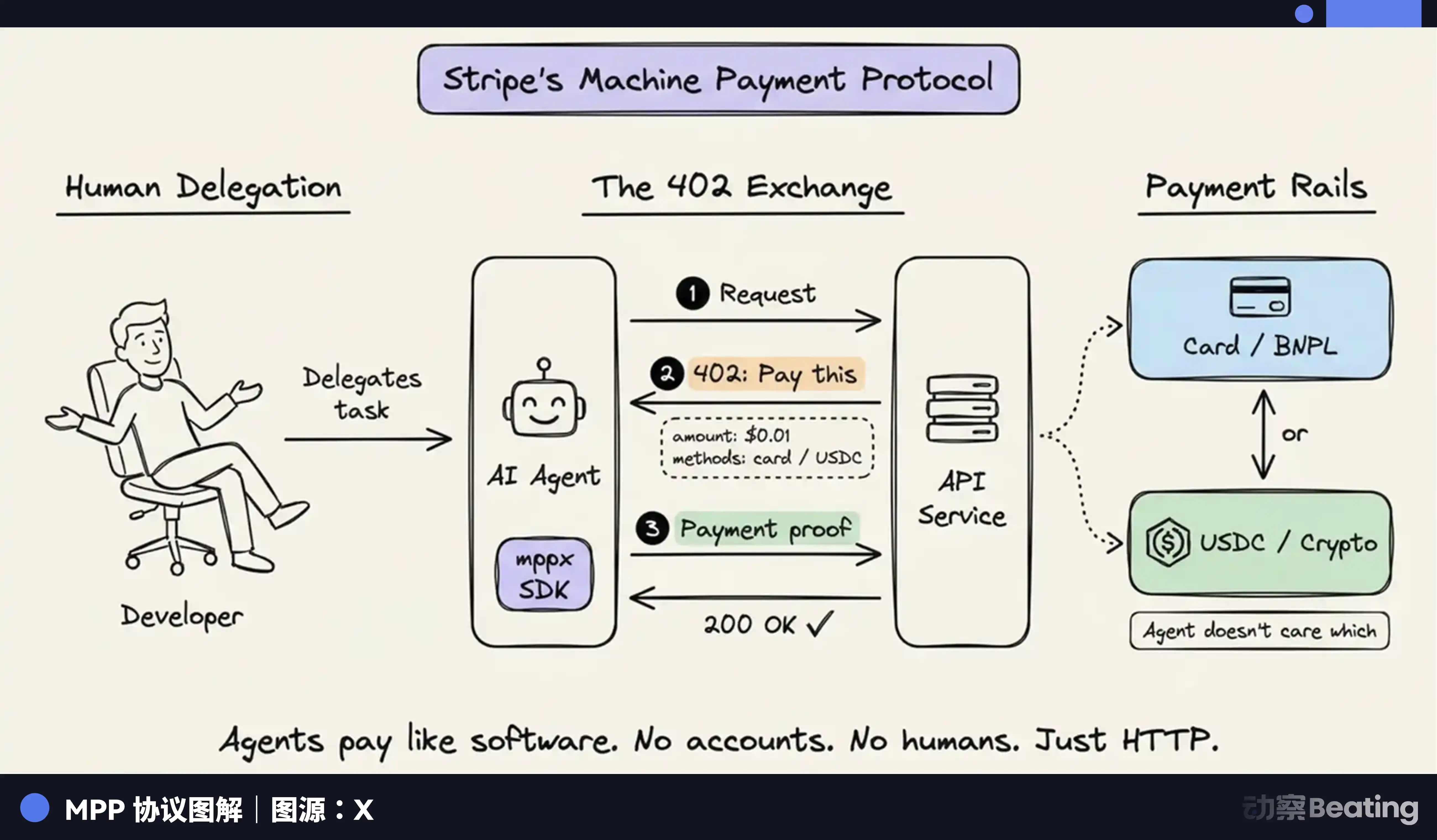
Token consumption now has an additional source. Previously, there was only the scenario of 'human dispatching agent.' Now, agents themselves are consuming Tokens, and using the money earned from Tokens to buy even more Tokens. Stripe co-founder John Collison used a term: deluge.
Huang Renxun provided the corresponding numbers: NVIDIA plans to increase Token generation rate from 22 million to 700 million, a 350-fold increase.
This is like building an entire highway network, betting that traffic flow will grow exponentially.
A $6 trillion infrastructure bet requires one assumption: the global Token consumption must be large enough to support the ROI. This assumption is currently just that, an expensive one.
In the last quarter of 2025, tech companies issued a record $108.7 billion in bonds. As we entered 2026, the first few weeks saw another $100 billion. Morgan Stanley and JPMorgan estimate that in the coming years, the total debt of AI-related companies could reach $15 trillion. According to Goldman Sachs, AI capital expenditure already accounts for around 3% of the U.S. GDP.
A group of Wall Streeters who first smelled the risk have started buying insurance. The volume of credit default swap transactions is on the rise. Paying a premium of a few tens of basis points, they are betting that these companies may default on their debt. Daniel Sorid, Citi's head of credit strategy, said at an investor conference, "As a credit investor, facing a transformation of this scale that requires such a large capital investment is inherently unsettling."
Google co-founder Larry Page once said something more extreme within the company, telling Google employees multiple times, "I would rather go bankrupt than lose this race."
It accurately describes a prisoner's dilemma: every giant is betting that their opponent will continue to invest, so they cannot stop either. Those who stop directly drop out.
There is a bright side with hard data. The Token generation rate has increased by 350 times. Stripe just let the agent spend money on their own. McKinsey has expanded from a few thousand agents to 25,000 in two years. If the agent economy takes off completely, the growth curve of Token consumption could indeed turn exponential.
But there is one date that is keeping many people up at night. The renewal cliff in the second half of 2026.
From 2024 to 2025, companies were spending their "innovation budget." CEOs needed to say "we are embracing AI" at the earnings call, not very price-sensitive, not demanding results, spending money on appearances. In the second half of 2026, the first wave of pilot projects reaches the renewal point. The innovation budget is depleted, the CTO gives up their seat across the table, and the CFO takes over. The CFO only recognizes one number: ROI.
If a large number of pilots are cut, there will be a sudden gap in Token's end consumption. The upstream $600 billion production capacity, data centers built, power connected, chips on the shelf, will turn into idle capacity.
Such a thing has happened in history.
In the year 2000, telecom companies spent trillions of dollars laying undersea cables. When the bubble burst, 90% of the world's cables lay dark under the sea, idle for nearly a decade. It wasn't until Netflix started streaming, and the iPhone sparked the mobile internet that the cables were slowly lit up. The cables were not laid in vain. The builders of the cable, Lucent, Nortel, and Tyco, all went bankrupt. The infrastructure remained, but the builders were gone.
In 2012, it was China's solar energy industry. Shangde in Wuxi and Suntech in Jiangxi undercut global component prices. With severe oversupply of capacity, the industry suffered a bloodbath for three years. The demand did eventually come later, and today solar energy is the fastest-growing energy source on Earth. Shangde went bankrupt. Suntech went bankrupt. The pioneers were left in the last stretch of darkness before dawn.
After Bell invented the telephone, Western Union refused to buy the patent for $100,000. Ten years later, Western Union was willing to offer $25 million, but Bell refused to sell. Thirty years later, the telephone network covered the entire United States. However, most of the small companies that had built the network did not live to see the day when the telephone became widespread. The winner was AT&T, which later acquired and monopolized everything.
The story of infrastructure is always this version. The direction is almost always correct, but timing can be deadly.
Back to the Token. In the structure mentioned earlier, the Token becomes labor, people become interfaces, Token allocation defines everything, with the premise that the Token is continuously, massively, and rapidly consumed. An engineer's 10x output relies on Token supply; remove it, and it goes back to zero. OpenAI's $840 billion valuation relies on computational power commitments; terminate the protocol, and it shrinks. A $600 billion infrastructure relies on end-user consumption growth; if the growth rate slows down, it turns into a mere shell of itself.
Each layer relies on the next. If consumption growth lags behind construction growth by two or three years, pricing for everyone in the entire chain will loosen.
Which Railroad Are You Relying On?
By 2023, having a card is king. By 2026, having a Token is king.
It sounds like a change of words, but the underlying transformation is deeper than most people realize.
GPU is an asset; once you buy it, it's yours, locked in a data center where no one else can take it.
Token is traffic. Your 10x output, your high valuation, your bargaining chip at the negotiation table, all rely on a continuous, non-owned supply. Turn off the faucet, and everything resets to zero.
When the Token truly becomes the working labor, people become interfaces attached to the Token. A good interface can enhance the value of the Token, and judgment, aesthetics, experience are still relevant. But how much an interface can do primarily depends on how much Token it has access to.
In the 1870s, American farmers discovered that growing good wheat wasn't enough; it had to be next to the railroad. In the 1950s, craftsmen found out that no matter how skilled they were, they couldn't compete with assembly line workers. In 2026, engineers are discovering that no matter how beautifully they code, without a Token allocation, everything is just spinning wheels.
When the Token truly becomes working labor, people become interfaces. While the quality of the interface itself is still important, the value of the interface primarily depends on who is providing its power.
You may also like

Dragonfly Partners: Most agents will not engage in autonomous trading, how can crypto payments prevail?

US AI Startup Goes All In on Chinese Mega-Model | Rewire News Morning Brief

Trump Lies Again: A "Five-Day Pause" Psyop, How Wall Street, Bitcoin, and Polymarket Insiders Synced Uposciogen

Ceasefire News Leaked Ahead of Time? Large Polymarket Bets on Outcome Before Trump's Tweet

BlackRock CEO's Annual Shareholder Letter: How is Wall Street Using AI to Keep Profiting from National Pension Funds?

Sun Valley Releases 2025 Financial Report: Bitcoin Mining Revenue Reaches $670 Million, Accelerating Transformation to AI Infrastructure Platform
On March 16, 2026, in Dallas, Texas, USA, CanGu Company (New York Stock Exchange code: CANG, hereinafter referred to as "CanGu" or the "Company") today announced its unaudited financial performance for the fourth quarter and full year ended December 31, 2025. As a btc-42">bitcoin mining enterprise relying on a globally operated layout and dedicated to building an integrated energy and AI computing power platform, CanGu is actively advancing its business transformation and infrastructure development.
• Financial Performance:
Total revenue for the full year 2025 was $688.1 million, with $179.5 million in the fourth quarter.
Bitcoin mining business revenue for the full year was $675.5 million, with $172.4 million in the fourth quarter.
Full-year adjusted EBITDA was $24.5 million, while the fourth quarter was -$156.3 million.
• Mining Operations and Costs:
A total of 6,594.6 bitcoins were mined throughout the year, averaging 18.07 bitcoins per day; of which 1,718.3 bitcoins were mined in the fourth quarter, averaging 18.68 bitcoins per day.
The average mining cost for the full year (excluding miner depreciation) was $79,707 per bitcoin, and for the fourth quarter, it was $84,552;
The all-in sustaining costs were $97,272 and $106,251 per bitcoin, respectively.
As of the end of December 2025, the company has cumulatively produced 7,528.4 bitcoins since entering the bitcoin mining business.
• Strategic Progress:
The company has completed the termination of the American Depositary Receipt (ADR) program and transitioned to a direct listing on the NYSE to enhance information transparency and align with its strategic direction, with a long-term goal of expanding its investor base.
CEO Paul Yu stated: "2025 marked the company's first full year as a bitcoin mining enterprise, characterized by rapid execution and structural reshaping. We completed a comprehensive adjustment of our asset system and established a globally distributed mining network. Additionally, the company introduced a new management team, further strengthening our capabilities and competitive advantage in the digital asset and energy infrastructure space. The completion of the NYSE direct listing and USD pricing also signifies our transformation into a global AI infrastructure company."
"As we enter 2026, the company will continue to optimize its balance sheet structure and enhance operational efficiency and cost resilience through adjustments to the miner portfolio. At the same time, we are advancing our strategic transformation into an AI infrastructure provider. Leveraging EcoHash, we will utilize our capabilities in scalable computing power and energy networks to provide cost-effective AI inference solutions. The relevant site transformations and product development are progressing simultaneously, and the company is well-positioned to sustain its execution in the new phase."
The company's Chief Financial Officer, Michael Zhang, stated: "By 2025, the company is expected to achieve significant revenue growth through its scaled mining operations. Despite recording a net loss of $452.8 million from ongoing operations, mainly due to one-time transformation costs and market-driven fair value adjustments, the company, from a financial perspective, will reduce its leverage, optimize its Bitcoin reserve strategy and liquidity management, introduce new capital to strengthen its financial position, and seize investment opportunities in high-potential areas such as AI infrastructure while navigating market volatility."
The total revenue for the fourth quarter was $1.795 billion. Of this, the Bitcoin mining business contributed $1.724 billion in revenue, generating 1,718.3 Bitcoins during the quarter. Revenue from the international automobile trading business was $4.8 million.
The total operating costs and expenses for the fourth quarter amounted to $4.56 billion, primarily attributed to expenses related to the Bitcoin mining business, as well as impairment of mining machines and fair value losses on Bitcoin collateral receivables.
This includes:
· Cost of Revenue (excluding depreciation): $1.553 billion
· Cost of Revenue (depreciation): $38.1 million
· Operating Expenses: $9.9 million (including related-party expenses of $1.1 million)
· Mining Machine Impairment Loss: $81.4 million
· Fair Value Loss on Bitcoin Collateral Receivables: $171.4 million
The operating loss for the fourth quarter was $276.6 million, a significant increase from a loss of $0.7 million in the same period of 2024, primarily due to the downward trend in Bitcoin prices.
The net loss from ongoing operations was $285 million, compared to a net profit of $2.4 million in the same period last year.
The adjusted EBITDA was -$156.3 million, compared to $2.4 million in the same period last year.
The total revenue for the full year was $6.881 billion. Of this, the revenue from the Bitcoin mining business was $6.755 billion, with a total output of 6,594.6 Bitcoins for the year. Revenue from the international automobile trading business was $9.8 million.
The total annual operating costs and expenses amount to $1.1 billion.
Specifically, they include:
· Revenue Cost (excluding depreciation): $543.3 million
· Revenue Cost (depreciation): $116.6 million
· Operating Expenses: $28.9 million (including related-party expenses of $1.1 million)
· Miner Impairment Loss: $338.3 million
· Bitcoin Collateral Receivable Fair Value Change Loss: $96.5 million
The full-year operating loss is $437.1 million. The continuing operations net loss is $452.8 million, while in 2024, there was a net profit of $4.8 million.
The 2025 non-GAAP adjusted net profit is $24.5 million (compared to $5.7 million in 2024). This measure does not include share-based compensation expenses; refer to "Use of Non-GAAP Financial Measures" for details.
As of December 31, 2025, the company's key assets and liabilities are as follows:
· Cash and Cash Equivalents: $41.2 million
· Bitcoin Collateral Receivable (Non-current, related party): $663.0 million
· Miner Net Value: $248.7 million
· Long-Term Debt (related party): $557.6 million
In February 2026, the company sold 4,451 bitcoins and repaid a portion of related-party long-term debt to reduce financial leverage and optimize the asset-liability structure.
As per the stock repurchase plan disclosed on March 13, 2025, as of December 31, 2025, the company had repurchased a total of 890,155 shares of Class A common stock for approximately $1.2 million.

The US AI Startup Is Loving China's Open Source Model

Three Weeks of the US-Iran War: Who's Making Money, Who's Paying the Bill?

Interpreting Polymarket's Major Update Last Night: Fee Expansion, Self-Regulation, and New Incentives

From Human Application to Intelligent Collaboration: How GOAT Network Builds the Next Generation Digital Economy

CZ Washington Dialogue: Crypto Entrepreneurs are Accelerating Their Return to the United States

Morning Report | Strategy increased its holdings by 1,031 bitcoins last week; Katana Blockchain acquires IDEX; NYSE completes rule change to eliminate trading limits on crypto ETF options

Electric Capital: Tracking 501 types of yield-generating RWA assets, we discovered these patterns
Those who are cut off by AI will not disappear; they will become the creators of the next round of the economy

Stablecoins reshaping cross-border payments in Asia? Strategic panorama and investment opportunity analysis

Zuckerberg is building an AI agent to help him as CEO

Bloomberg: Swiss Private Bank Old Guard Rifts, Is Bitcoin the Spark?
Zuckerberg is building an AI assistant to help him be CEO
Dragonfly Partners: Most agents will not engage in autonomous trading, how can crypto payments prevail?
US AI Startup Goes All In on Chinese Mega-Model | Rewire News Morning Brief
Trump Lies Again: A "Five-Day Pause" Psyop, How Wall Street, Bitcoin, and Polymarket Insiders Synced Uposciogen
Ceasefire News Leaked Ahead of Time? Large Polymarket Bets on Outcome Before Trump's Tweet
BlackRock CEO's Annual Shareholder Letter: How is Wall Street Using AI to Keep Profiting from National Pension Funds?
Sun Valley Releases 2025 Financial Report: Bitcoin Mining Revenue Reaches $670 Million, Accelerating Transformation to AI Infrastructure Platform
On March 16, 2026, in Dallas, Texas, USA, CanGu Company (New York Stock Exchange code: CANG, hereinafter referred to as "CanGu" or the "Company") today announced its unaudited financial performance for the fourth quarter and full year ended December 31, 2025. As a btc-42">bitcoin mining enterprise relying on a globally operated layout and dedicated to building an integrated energy and AI computing power platform, CanGu is actively advancing its business transformation and infrastructure development.
• Financial Performance:
Total revenue for the full year 2025 was $688.1 million, with $179.5 million in the fourth quarter.
Bitcoin mining business revenue for the full year was $675.5 million, with $172.4 million in the fourth quarter.
Full-year adjusted EBITDA was $24.5 million, while the fourth quarter was -$156.3 million.
• Mining Operations and Costs:
A total of 6,594.6 bitcoins were mined throughout the year, averaging 18.07 bitcoins per day; of which 1,718.3 bitcoins were mined in the fourth quarter, averaging 18.68 bitcoins per day.
The average mining cost for the full year (excluding miner depreciation) was $79,707 per bitcoin, and for the fourth quarter, it was $84,552;
The all-in sustaining costs were $97,272 and $106,251 per bitcoin, respectively.
As of the end of December 2025, the company has cumulatively produced 7,528.4 bitcoins since entering the bitcoin mining business.
• Strategic Progress:
The company has completed the termination of the American Depositary Receipt (ADR) program and transitioned to a direct listing on the NYSE to enhance information transparency and align with its strategic direction, with a long-term goal of expanding its investor base.
CEO Paul Yu stated: "2025 marked the company's first full year as a bitcoin mining enterprise, characterized by rapid execution and structural reshaping. We completed a comprehensive adjustment of our asset system and established a globally distributed mining network. Additionally, the company introduced a new management team, further strengthening our capabilities and competitive advantage in the digital asset and energy infrastructure space. The completion of the NYSE direct listing and USD pricing also signifies our transformation into a global AI infrastructure company."
"As we enter 2026, the company will continue to optimize its balance sheet structure and enhance operational efficiency and cost resilience through adjustments to the miner portfolio. At the same time, we are advancing our strategic transformation into an AI infrastructure provider. Leveraging EcoHash, we will utilize our capabilities in scalable computing power and energy networks to provide cost-effective AI inference solutions. The relevant site transformations and product development are progressing simultaneously, and the company is well-positioned to sustain its execution in the new phase."
The company's Chief Financial Officer, Michael Zhang, stated: "By 2025, the company is expected to achieve significant revenue growth through its scaled mining operations. Despite recording a net loss of $452.8 million from ongoing operations, mainly due to one-time transformation costs and market-driven fair value adjustments, the company, from a financial perspective, will reduce its leverage, optimize its Bitcoin reserve strategy and liquidity management, introduce new capital to strengthen its financial position, and seize investment opportunities in high-potential areas such as AI infrastructure while navigating market volatility."
The total revenue for the fourth quarter was $1.795 billion. Of this, the Bitcoin mining business contributed $1.724 billion in revenue, generating 1,718.3 Bitcoins during the quarter. Revenue from the international automobile trading business was $4.8 million.
The total operating costs and expenses for the fourth quarter amounted to $4.56 billion, primarily attributed to expenses related to the Bitcoin mining business, as well as impairment of mining machines and fair value losses on Bitcoin collateral receivables.
This includes:
· Cost of Revenue (excluding depreciation): $1.553 billion
· Cost of Revenue (depreciation): $38.1 million
· Operating Expenses: $9.9 million (including related-party expenses of $1.1 million)
· Mining Machine Impairment Loss: $81.4 million
· Fair Value Loss on Bitcoin Collateral Receivables: $171.4 million
The operating loss for the fourth quarter was $276.6 million, a significant increase from a loss of $0.7 million in the same period of 2024, primarily due to the downward trend in Bitcoin prices.
The net loss from ongoing operations was $285 million, compared to a net profit of $2.4 million in the same period last year.
The adjusted EBITDA was -$156.3 million, compared to $2.4 million in the same period last year.
The total revenue for the full year was $6.881 billion. Of this, the revenue from the Bitcoin mining business was $6.755 billion, with a total output of 6,594.6 Bitcoins for the year. Revenue from the international automobile trading business was $9.8 million.
The total annual operating costs and expenses amount to $1.1 billion.
Specifically, they include:
· Revenue Cost (excluding depreciation): $543.3 million
· Revenue Cost (depreciation): $116.6 million
· Operating Expenses: $28.9 million (including related-party expenses of $1.1 million)
· Miner Impairment Loss: $338.3 million
· Bitcoin Collateral Receivable Fair Value Change Loss: $96.5 million
The full-year operating loss is $437.1 million. The continuing operations net loss is $452.8 million, while in 2024, there was a net profit of $4.8 million.
The 2025 non-GAAP adjusted net profit is $24.5 million (compared to $5.7 million in 2024). This measure does not include share-based compensation expenses; refer to "Use of Non-GAAP Financial Measures" for details.
As of December 31, 2025, the company's key assets and liabilities are as follows:
· Cash and Cash Equivalents: $41.2 million
· Bitcoin Collateral Receivable (Non-current, related party): $663.0 million
· Miner Net Value: $248.7 million
· Long-Term Debt (related party): $557.6 million
In February 2026, the company sold 4,451 bitcoins and repaid a portion of related-party long-term debt to reduce financial leverage and optimize the asset-liability structure.
As per the stock repurchase plan disclosed on March 13, 2025, as of December 31, 2025, the company had repurchased a total of 890,155 shares of Class A common stock for approximately $1.2 million.


 App
App