
What Is Sandisk and Why Did It Go From $40 to $2,000 in One Year?

Sandisk stock is trading around $2,000. Eighteen months ago, nobody was talking about it.
The same company that is now a $300 billion market capitalization name and a constituent of the Nasdaq100 was trading at approximately $40 per share in early 2025, covered by a handful of analysts, and largely ignored by the institutional investors who are now its largest shareholders. Understanding how that happened requires going back to what Sandisk actually is, where it came from, and what the AI infrastructure buildout did to a business that was quietly positioned at the intersection of two of the most powerful trends in technology.
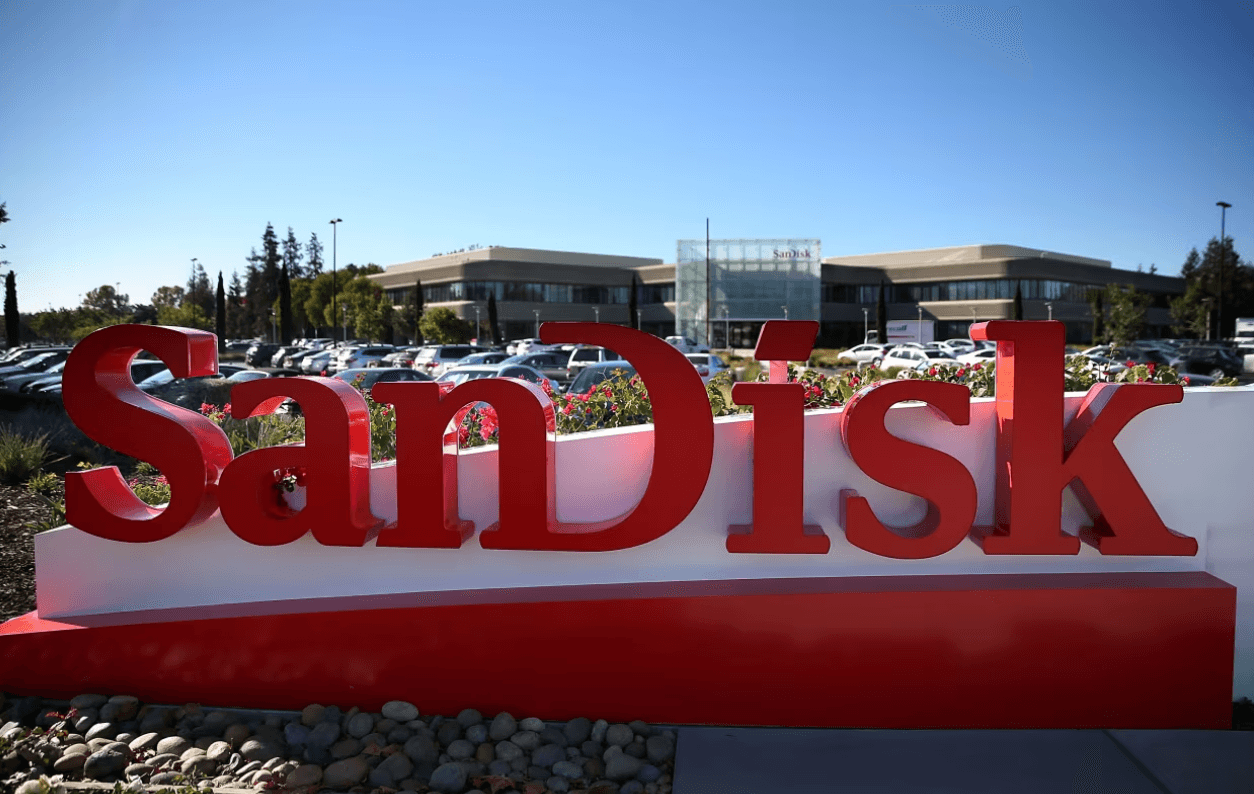
What Sandisk Was Before the Rally
Sandisk Corporation was part of Western Digital for years, operating as its NAND flash memory division alongside Western Digital's hard disk drive business. NAND flash is the technology inside solid-state drives, USB drives, and SD cards — the kind of storage that replaced spinning hard drives in laptops and phones over the past decade.
Western Digital decided in early 2025 to spin off the Sandisk business as a separate public company, listing it independently on Nasdaq under the ticker SNDK. The logic was that the two businesses, NAND flash memory and hard disk drives, had different customer bases, different capital cycles, and different growth profiles. Separating them would allow each to be valued on its own merits rather than averaged together.
At the time of the spinoff, Sandisk was valued as exactly what it appeared to be: a cyclical NAND flash memory manufacturer in a market that had historically been characterized by brutal price swings, periodic oversupply, and compressed margins. The stock went public at prices that implied the market expected it to trade like a commodity business, because that is what NAND businesses had historically been.
What the market did not fully price is what was about to happen to demand.
The Inflection Point That Changed Everything
The AI infrastructure buildout did something unexpected to the storage market. Training large language models and running inference at scale requires not just GPU compute but enormous amounts of fast, high-capacity storage. The data that goes into training models, the intermediate results generated during processing, and the outputs that need to be served at low latency all require storage that is both fast and dense.
The kind of storage that AI data centers needed was not commodity consumer NAND. It was enterprise-grade SSDs with high endurance, low latency, and capacities that had never been commercially available at scale. Sandisk happened to be one of the few companies with the manufacturing capability and intellectual property to produce what AI data centers were suddenly demanding.
The 256 terabyte SSD that hyperscalers began adopting for AI infrastructure is a product that did not exist at commercial scale two years ago. Sandisk developed it, and the demand for it arrived faster than anyone had modeled.
When demand for a specific product exceeds available supply, prices rise. When prices rise for a business that has significant fixed manufacturing costs, margins expand dramatically. That is what happened to Sandisk's financials starting in fiscal 2026, and it is what drove the stock from $40 to $2,000.
The Numbers That Explain the Price
The move from $40 to $2,000 is large enough that it invites skepticism. But the financial results make the trajectory coherent rather than speculative.
Fiscal 2025, which ended in July 2025, showed revenue growing 10% with adjusted gross margin expanding from 14.8% to 30.3%. The company returned to profitability. Those were solid numbers for a cyclical memory company, not the kind of results that would produce a 4,900% stock gain.
What followed is what produced the gain. Q3 fiscal 2026 results, reported in May, showed revenue of $5.95 billion, up 251% year over year. The data center segment, which barely existed as a meaningful contributor two years earlier, jumped 645% year over year to $1.46 billion. Adjusted EPS of $23.41 beat analyst consensus of $14.66 by a massive margin. Gross margins reached 78.4%, a level that more closely resembles a software business than a memory manufacturer.
Analysts expect full fiscal 2026 EPS of $50.53, up approximately 2,739% year over year. Fiscal 2027 EPS is expected at $133.84, another 165% increase. Forward earnings multiples at current prices are approximately 10 to 15 times next year's estimates, which means the stock is not expensive on an earnings basis despite the extraordinary price appreciation.
That combination, accelerating revenue growth, margin expansion to software-like levels, and valuation that remains reasonable on forward earnings, is what produced the stock's extraordinary performance.
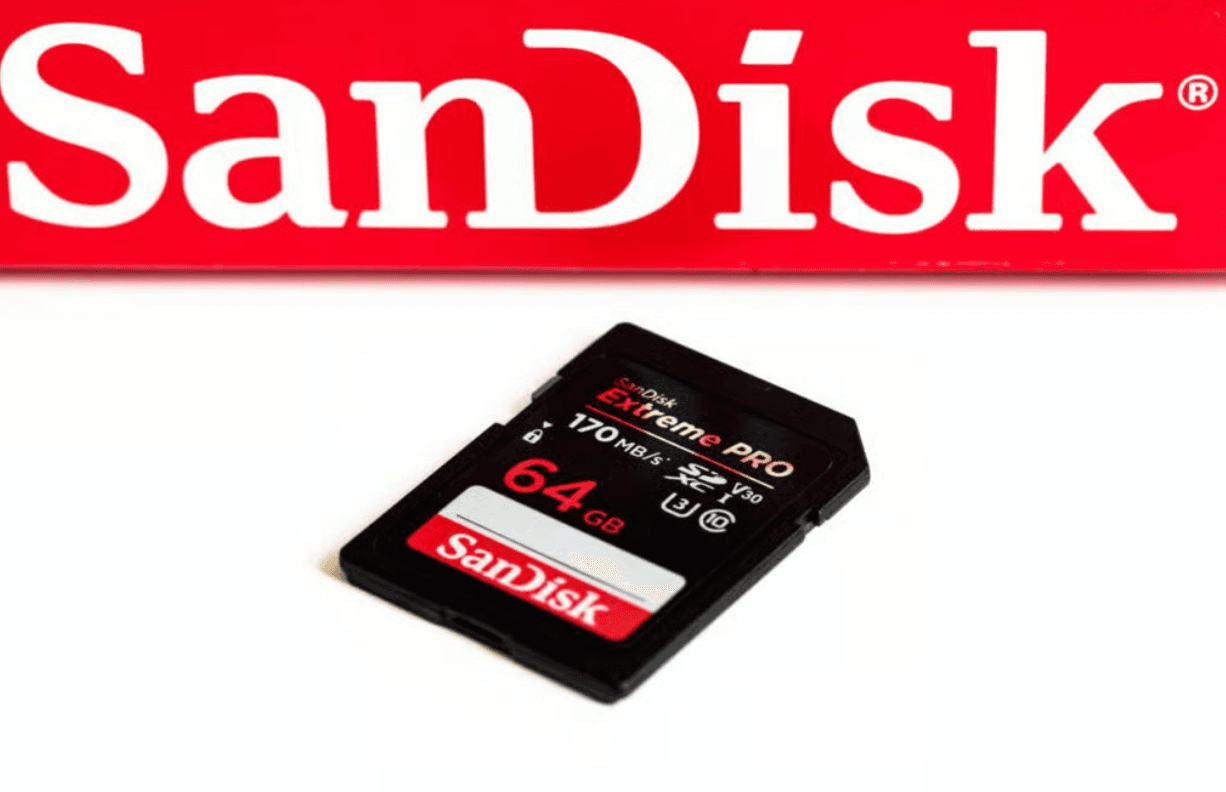
The Three Specific Things That Accelerated the Move
Several specific developments turned Sandisk from a spinoff that was easy to ignore into one of the most talked-about stocks in the market.
The first was the long-term supply agreement strategy. Sandisk signed five multi-year supply contracts with major customers, including financial guarantees. These contracts transform the revenue picture from commodity spot-pricing exposure into something closer to contracted recurring revenue. When investors see a memory company with multi-year contracts and financial guarantees, the valuation multiple expands because the earnings are more predictable and the cyclical risk is partially hedged.
The second was the net cash position and buyback announcement. Sandisk announced a $6 billion buyback program alongside earnings results, and the company holds a net cash position with net debt of negative $3.53 billion. A memory company in a net cash position with a billion-dollar buyback authorization is a different risk profile from the overleveraged commodity manufacturers that defined the industry's reputation for volatility.
The third was institutional recognition. A year ago, two analysts covered Sandisk. Today, 22 analysts cover the stock with a consensus Buy rating. As coverage expanded and institutional investors built positions, the stock's liquidity and visibility improved in ways that created self-reinforcing buying pressure alongside the fundamental story.
Why $2,000 Is Not Obviously Wrong Now
This is the question that matters most for anyone looking at Sandisk today.
At $40, Sandisk was priced as a slow-growth commodity memory manufacturer because that is what its history suggested it would remain. At $2,000, it is priced as an AI infrastructure company with contracted recurring revenue, software-like margins, and a product that is genuinely supply constrained in a market where demand shows no signs of moderating.
Both prices were rational given the information available at each point in time. The $40 price did not anticipate the AI demand inflection. The $2,000 price reflects that inflection and the contracted multi-year revenue that followed from it.
Whether $2,000 remains the right price depends on whether the contracted revenue delivers as projected, whether margins hold as supply eventually increases, and whether the company can develop the next generation of products that keeps it in the highest value segment of the enterprise storage market. All three of those questions have favorable near term answers based on current guidance and analyst consensus.
For investors tracking stock, WEEX provides access to stock trading products, including the First Stock Trade Protected campaign offering eligible users additional protection on their first stock trade.
Conclusion
Sandisk went from $40 to $2,000 because a business that the market had categorized as a cyclical commodity manufacturer turned out to be positioned at the intersection of the most important infrastructure buildout in a decade. The 256TB enterprise SSD that AI data centers needed in unprecedented volume was a product Sandisk could make at scale when demand arrived. What followed in the financials, 251% revenue growth, 645% data center segment growth, 78% gross margins, was the market's delayed recognition of a product-market fit that had been building quietly for years.
The extraordinary stock price performance was not random. It was the market catching up to a business that had changed in ways it did not initially recognize.
FAQ
1. What is Sandisk stock and what does the company do?
Sandisk Corporation makes NAND flash memory storage products including enterprise SSDs, consumer storage, and data center storage solutions. It was spun off from Western Digital in early 2025 and trades on Nasdaq under the ticker SNDK.
2. Why did Sandisk stock go from $40 to $2,000?
AI infrastructure buildout created unprecedented demand for high-capacity enterprise SSDs that Sandisk manufactures. Revenue grew 251% year over year in Q3 fiscal 2026, gross margins expanded to 78%, and the company signed five multi-year supply contracts with major customers that transformed the cyclical risk profile of the business.
3. Is Sandisk stock expensive at $2,000?
On forward earnings, Sandisk trades at approximately 10 to 15 times next year's EPS estimates, which is not expensive for a company growing revenue at 251% year over year. The valuation risk is in whether the extraordinary margins and growth rates are sustainable as supply additions eventually normalize the NAND market.
4. What is Sandisk's connection to Western Digital?
Sandisk was the NAND flash memory division of Western Digital before being spun off as an independent public company in early 2025. Western Digital retains its hard disk drive business separately.
5. What are the biggest risks to Sandisk stock at current prices?
Margin compression as NAND supply eventually increases, approximately 60% of fiscal 2027 output unhedged to spot pricing, potential competition from Chinese NAND manufacturers, and insider selling that has been consistent throughout the rally.
Disclaimer
This content is provided for general informational and educational purposes only and should not be considered financial, investment, legal, or tax advice. Nothing in this article constitutes an offer, recommendation, solicitation, or invitation to buy, sell, or trade any crypto asset or use any specific service. Crypto assets are highly volatile and involve a high degree of risk. You may lose some or all of the value of your investment and should not invest funds you cannot afford to lose. WEEX services may not be available in all regions and are subject to applicable laws, regulations, and user eligibility requirements. Please carefully assess risks and confirm local requirements before making any financial decisions.
You may also like

Introducing Morpho ($MORPHO): Open Credit Network and Price Prediction
Morpho is an open credit network for onchain lending, drawing attention as Morpho Midnight and ecosystem integrations expand.
MU Stock Price Prediction 2026-2030: Can Micron Hit $4,000 as AI Memory Demand Explodes?
Can MU stock reach $4,000 by 2030? Get the latest MU stock price prediction 2026-2030, analyst targets, and learn how to buy MU stock today.
$SYN Airdrop on WEEX: Complete Guide to Synapse and Claim Free $SYN
Learn Synapse tokenomics, cross-chain governance utility, and how to claim free tokens in the WEEX 50,000 USDT SYN airdrop before July 8, 2026.
MSFT Stock Analysis 2026: Why Microsoft's 33% Drop Could Be a Generational Buying Opportunity?
Top 5 TradFi Assets to Trade in 2026: Are TradFi Assets Worth Investing?
Trade Tesla, Gold, Silver, Nasdaq & Nvidia on WEEX TradFi. Compare top TradFi assets, leverage options, and how to invest in TradFi assets with USDT.
What is NVIDIA(NVDA) Coin? Everything You Need to Know About NVDA/USDT Perpetual Futures on WEEX
NVIDIA (NVDA) Coin on WEEX refers to the USDT‑margined perpetual futures tracking NVIDIA Corporation’s stock price rather than…
What is NVIDIA(NVDA) Coin? Everything You Need to Know and How to Trade NVDA/USDT on WEEX
NVDA/USDT perpetual futures were newly listed on WEEX, with trading opened on July 2, 2026. This derivative tracks…
Can NVDA Reach $250 in 2026? NVDA Price Prediction
KEY TAKEAWAYS Current price: NVDA/USDT futures trade near $196.13 at publication time. Required move: around +27.5% is needed…
NVIDIA (NVDA) Price Prediction: July 2026 Forecast, Technical Levels, and Strategy
NVIDIA (NVDA) has become the bellwether for AI risk appetite, and traders can access its crypto-settled exposure via…
Sandisk Stock Price Prediction 2026–2030: Can SNDK Reach $3,000?
Bernstein set a $3,000 price target on Sandisk stock the day before it fell 10% to start Q3. At approximately $2,023 today, getting to $3,000 means roughly 48% appreciation. This guide examines what that path requires, what the bear case says, and what the realistic range of outcomes looks like through 2030.
Sandisk Stock Falls 10% to Start Q3: Is the AI Memory Rally Finally Over?
Sandisk stock dropped approximately 10% on July 1, the first trading day of Q3, after surging over 720% in the first half of 2026. The selloff had nothing to do with the company's business. This guide examines what actually triggered the decline, whether it signals the end of the AI memory rally, and what investors should actually be watching.
What is Synapse(SYN) Coin? Everything You Need to Know for Cross‑Chain Trading and Investing
Synapse (SYN) is a cross-chain interoperability protocol enabling secure asset transfers, messaging, and smart contract calls across multiple…
SK Hynix Stock Price Forecast 2026–2027: Structural HBM Shortage Analysis
Expect a clear look at how the AI-driven memory cycle and a structural HBM bottleneck could shape SK…
Can SK Hynix Reach $2000 in 2026? SK Hynix Price Prediction
KEY TAKEAWAYS Current price: $1523, based on live market data today from major crypto trackers. Required move to…
If You Can’t Buy SK Hynix Stocks, What Are the Trading Alternatives?
If your broker doesn’t support SK Hynix or you want 24/7 access, you can still trade SK Hynix…
Buy, Sell, or Hold VRT Stock? Vertiv Forecast 2026–2027 AI Data Center Boom
This article breaks down whether to buy, sell, or hold VRT through 2026–2027, using fresh fundamentals, trend structure,…
Switzerland vs Canada 2026 Schedule: Kickoff Times and Seattle Venue Guide — Paraguay Eliminates Germany in the Biggest Football Upset of 2026
This guide unpacks two hot topics: the Paraguay vs Germany shock that reshaped the 2026 global football championship…
Can SYN Reach $1 in 2026? Synapse Price Prediction
KEY TAKEAWAYS Current price: SYN trades around $0.5346 at publication time. Required move to $1: about +87% from…
Introducing Morpho ($MORPHO): Open Credit Network and Price Prediction
Morpho is an open credit network for onchain lending, drawing attention as Morpho Midnight and ecosystem integrations expand.
MU Stock Price Prediction 2026-2030: Can Micron Hit $4,000 as AI Memory Demand Explodes?
Can MU stock reach $4,000 by 2030? Get the latest MU stock price prediction 2026-2030, analyst targets, and learn how to buy MU stock today.
$SYN Airdrop on WEEX: Complete Guide to Synapse and Claim Free $SYN
Learn Synapse tokenomics, cross-chain governance utility, and how to claim free tokens in the WEEX 50,000 USDT SYN airdrop before July 8, 2026.
MSFT Stock Analysis 2026: Why Microsoft's 33% Drop Could Be a Generational Buying Opportunity?
Top 5 TradFi Assets to Trade in 2026: Are TradFi Assets Worth Investing?
Trade Tesla, Gold, Silver, Nasdaq & Nvidia on WEEX TradFi. Compare top TradFi assets, leverage options, and how to invest in TradFi assets with USDT.
What is NVIDIA(NVDA) Coin? Everything You Need to Know About NVDA/USDT Perpetual Futures on WEEX
NVIDIA (NVDA) Coin on WEEX refers to the USDT‑margined perpetual futures tracking NVIDIA Corporation’s stock price rather than…