
Who Will Control AI? Why Decentralized AI May Be the Only Alternative to Government and Big Tech

 Prefer us on Google


 TL;DR:
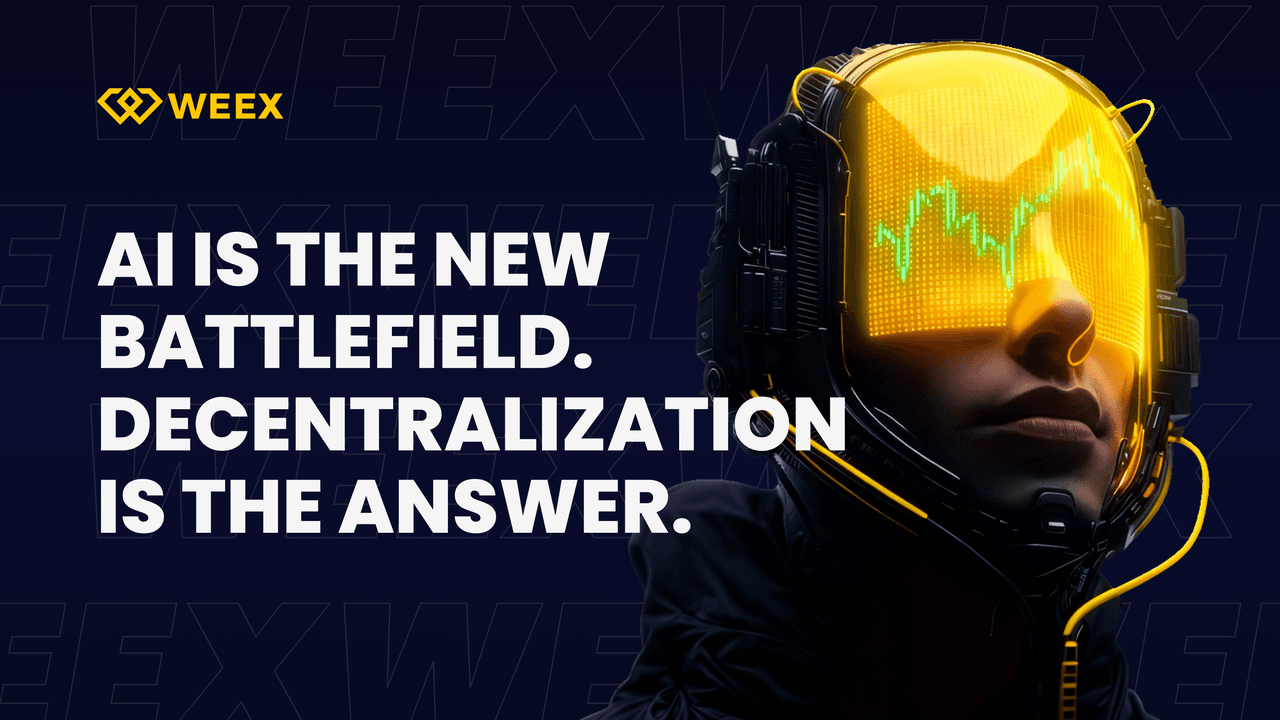
- AI is becoming critical digital infrastructure — and governments and corporations are racing to control it.
- The Anthropic–DoD dispute is an early, public signal of the political battles ahead.
- Regulatory frameworks are being built around centralized AI by default, entrenching existing power structures.
- Decentralized compute, token-incentivized AI, and on-chain governance are the Web3 community's answer.
- The window to build a credible alternative is open now — it won't stay open forever.
AI is no longer just a productivity tool. It has quietly become critical digital infrastructure — the backbone of financial systems, supply chains, media ecosystems, and increasingly, state power. And as with every form of critical infrastructure throughout history, control over it is now openly contested.
The question is no longer whether AI will be governed. It's who will govern it, for whose benefit, and whether anyone outside a small circle of corporations and governments will have any meaningful say.
For the crypto and Web3 community, this is not an abstract policy debate. It is the same fight we have been waging since Satoshi published the whitepaper.
The Anthropic–DoD Conflict Signals a New Battle Over AI Governance
Anthropic — builder of the Claude models and one of the most prominent voices in AI safety — reportedly found itself in direct tension with the United States Department of Defense over how its models should behave in high-stakes government deployments. The core disagreement: operational autonomy versus safety guardrails. How much latitude should an AI system have when deployed in sensitive, potentially lethal, contexts?
The details remain contested. But the pattern is what matters. A government entity sought to influence the behavior of a private AI system to serve national security interests. The company resisted, at least partially. The tension is now public.
This is not a one-off dispute. It is a preview of the political economy of AI — where the most capable systems become strategic assets, governments apply pressure to access and shape them, and the rest of the world watches from outside the room.
Why Centralized AI Infrastructure Gives Big Tech and Governments Control
To understand why this matters, you have to understand how AI development actually works. Training a frontier model requires:
- Compute at scale — dominated by Nvidia GPUs and accessible primarily through AWS, Azure, and Google Cloud
- Proprietary data — curated, cleaned, and controlled by a handful of organizations
- Specialized talent — concentrated in a small number of labs
This isn't inefficiency. This is the system working as designed. Centralization accelerates development, enables rapid scaling, and produces commercially viable models quickly. The problem is that it also concentrates decision-making power in a small number of actors — actors who are subject to government pressure, shareholder incentives, and geopolitical interests that do not align with users or the broader public.
When the infrastructure layer of the digital economy is controlled by three cloud providers and a handful of AI labs, sovereignty becomes an illusion — for individuals, businesses, and even smaller nation-states.
-- Price
The AI Governance Gap: Why Regulation Favors Centralized AI
Here is the piece most mainstream commentary on AI governance misses: regulatory frameworks are being built around centralized AI by default.
The EU AI Act, U.S. executive orders, and proposed legislation worldwide all assume that AI will be developed and deployed by identifiable, regulatable corporate entities. They are designed to govern a world where a small number of labs produce models that everyone else consumes.
This assumption is not neutral. It entrenches the current structure. It frames centralized AI as the baseline and treats decentralized alternatives as edge cases to be accommodated, if at all.
The crypto community has seen this playbook before. Legacy financial regulation was built around banks, and when DeFi emerged, regulators initially struggled to apply frameworks designed for intermediaries to systems with no intermediaries. The same dynamic is coming for AI.
Decentralized AI: How Web3 and Crypto Are Building an Alternative
The convergence of AI and crypto is not hype. It is an architectural necessity.
Several projects are already building the foundations of decentralized AI infrastructure:
- Bittensor creates token-incentivized networks where participants contribute machine learning compute and are rewarded for producing useful intelligence — removing the central model owner entirely.
- Render Network distributes GPU compute across a global network, reducing dependence on hyperscale cloud providers.
- Akash Network provides a decentralized compute marketplace, enabling developers to access infrastructure without going through AWS or Google.
Beyond compute, blockchain's ability to verify data provenance opens a genuinely new possibility: compensating the people and organizations whose data trains AI models. Right now, that value is captured almost entirely by the labs. Token-based incentive structures could redirect it back to contributors — creating a more equitable and sustainable data economy.
And autonomous AI agents interacting natively with on-chain systems — executing trades, participating in governance, coordinating across protocols — represent a new class of economic actor that DeFi and DAO infrastructure is uniquely positioned to support. This is already visible at the retail level: the rise of the AI crypto trading bot has moved from niche experiment to mainstream demand, with traders increasingly looking for ways to automate strategies without relying on centralized platforms. For many users, the appeal is straightforward — knowing how to trade automatically using open, auditable systems that no single entity can switch off or manipulate.
Builders Driving Crypto AI Innovation: Hackathons, AI Agents, and Web3
Infrastructure alone does not build an ecosystem — developers do. Across Web3, AI-focused hackathons are emerging as an important testing ground for ideas that large labs would never prioritize: AI trading agents operating on transparent on-chain data, decentralized analytics tools, new models for community-owned intelligence.
Retail participation is also accelerating this shift. As more traders turn to an AI trading app to manage positions, execute strategies, and analyze on-chain data in real time, the question of who controls the underlying model matters more than ever. The best AI trading app is not simply the one with the slickest interface — it is the one built on infrastructure that users can trust, audit, and, in principle, govern. That standard is difficult to meet when the AI layer sits inside a black box controlled by a corporation or a government contract.
WEEX has leaned into this directly. WEEX AI Trading Hackathon series brings together developers, data scientists, and crypto-native builders to experiment at the intersection of machine learning and decentralized finance. With a second event planned for May, it represents a bet that the next wave of AI innovation won't come only from corporate labs — it will come from open communities with skin in the game.
The Deeper Stakes: AI as a Censorship and Control Layer
This is the addition the original conversation often skips over: AI is not just an economic asset. It is increasingly a political one.
Governments that control frontier AI models control the information layer of their economies. They can shape what questions get answered, what content gets surfaced, what decisions get automated, and what populations get surveilled. This is not speculation — it is already happening in authoritarian states, and the temptation exists in democratic ones too.
The Anthropic–DoD dispute is a relatively benign public example of a pressure dynamic that will intensify. As models become more capable, the gap between "safe" and "useful for state purposes" will be increasingly contested terrain. And companies, no matter how principled, are not immune to political and legal pressure over time.
Decentralization is not just about efficiency or access. It is about preventing AI from becoming a tool of concentrated power — state or corporate. That is a value the Web3 community has always held, and it is more relevant now than at any point since the first Bitcoin block was mined.
The Future of Decentralized AI: Can Web3 Compete With Big Tech?
Decentralized AI is still early. Distributed compute networks face real performance tradeoffs. On-chain AI governance is largely theoretical. The gap between frontier centralized models and decentralized alternatives remains wide.
But the same was true of decentralized finance in 2018. The same was true of the internet itself in 1995.
The window to establish decentralized AI infrastructure as a credible alternative — before regulatory frameworks calcify around centralized models and before government-corporate relationships become too entrenched to challenge — is open now. It will not stay open indefinitely.
The Web3 community has both the tools and the philosophical foundation to build what comes next. The question is whether it will move with the urgency the moment demands.
About WEEX
Founded in 2018, WEEX has developed into a global crypto exchange with over 6.2 million users across more than 150 countries. The platform emphasizes security, liquidity, and usability, providing over 1,200 spot trading pairs and offering up to 400x leverage in crypto futures trading. In addition to the traditional spot and derivatives markets, WEEX is expanding rapidly in the AI era — delivering real-time AI news, empowering users with AI trading tools, and exploring innovative trade-to-earn models that make intelligent trading more accessible to everyone. Its 1,000 BTC Protection Fund further strengthens asset safety and transparency, while features such as copy trading and advanced trading tools allow users to follow professional traders and experience a more efficient, intelligent trading journey.
Follow WEEX on social media
X: @WEEX_Official
Instagram: @WEEX Exchange
Tiktok: @weex_global
Youtube: @WEEX_Official
Discord: WEEX Community
Telegram: WeexGlobal Group
This content is provided for general informational purposes only and doesn't constitute financial, investment, legal, or tax advice. Any events, rewards, online promotions, or related information mentioned herein should not be considered a recommendation, solicitation, or invitation to purchase, sell, trade, or otherwise deal in any crypto assets. Crypto assets are highly volatile and may result in loss. The availability of WEEX services, products, and related events may vary by region. You are responsible for ensuring that your participation is in accordance with applicable local laws and regulations.
You may also like

DGrid AI: Reconstructing AI Infrastructure with On-Chain Verification and Open Markets

Coinbase Lists Render Token, Boosting AI Compute Access for Retail Traders

Top AI Tokens to Watch in 2026: Which AI Coins Are Worth Accumulating Early?
Looking for the best AI crypto tokens to invest in before the next market cycle? This guide explains what AI coins are, why 2026 could be a key accumulation window, and which infrastructure, AI agent, and data-layer projects may have strong long-term growth potential.

The latest disclosed candidate asset list from Gray includes HYPE, STX, VIRTUAL, and others

Data: The cryptocurrency sector is experiencing a broad increase, with the AI sector leading with over 7%, and BTC breaking through 70,000 USD

Cryptocurrency Market Experiences Decline on January 15, 2026
Key Takeaways Story (IP) experienced the largest decline, dropping by 25.06% after a two-week rebound fueled by investments…

Render Token Price Prediction – RENDER Estimated to Reach $2.87 By Jan 16, 2026
Key Takeaways The Render Token is projected to rise in value to approximately $2.87 by January 16, 2026,…

Nvidia’s Vera Rubin Keeps Crypto Networks Like Render In Demand
Key Takeaways Nvidia’s Vera Rubin architecture significantly cuts AI model costs, challenging decentralized GPU networks. Efficiency gains from…
Analysis: Cryptocurrency Market Rebound Gains Strength, AI Concept Coins Outperform Meme Coins

Best New Meme Coin to Purchase Under $0.01 – January 5
Key Takeaways PEPENODE is emerging as a promising meme coin with its current presale successfully raising over $2.5…
Decentralizing Crypto’s Backbone: Overcoming Cloud Limitations
Key Takeaways The centralized cloud infrastructure significantly impacts blockchain’s decentralization ideals, yet shifts towards distributed networks are gaining…

Why Decentralized Crypto Infrastructure is Struggling to Keep Up
Key Takeaways Decentralized cloud networks aim to decrease reliance on centralized cloud providers like AWS but face challenges…
Ripple and SBI Team Up for RLUSD Stablecoin Launch in Japan by Early 2026
Latest Crypto Market Snapshot as of August 22, 2025 BTC Soars to $115,250.00 ETH Hits $4,450.75 XRP Climbs…

Gensyn Coin Airdrop: How to Claim $500 Free Tokens by May 2025
I’ve been diving deep into blockchain projects since 2017, and Gensyn stands out after reviewing their litepaper and…

WEEX Brings AI Trading Off the Screen and Into the Hands of Global Users
From Miami to Milan, and from Paris to the Netherlands, WEEX's AI Trading emerged as the standout on-site activation across five major industry events, giving hundreds of users their first hands-on encounter with AI-driven trading through a risk-free simulated environment. The rollout marks a significant step in WEEX's broader strategy to make AI-powered trading tools accessible, intuitive, and engaging for a global audience — both online and offline.

AI Crypto Trading in 2026: How AI Agents Use Stablecoins for Capital Management and Settlement
Learn how AI agents use stablecoins for crypto trading in 2026 — managing capital, settling transactions, and operating across exchanges and DeFi protocols.
AI Trading's Ultimate Test: Empower Your AI Strategy with Tencent Cloud to Win $1.88M & a Bentley
AI traders! Win $1.88M & a Bentley by crushing WEEX's live-market challenge. Tencent Cloud powers your AI Trading bot - can it survive the Feb 9 finals?

How a Risk-Controlled AI Crypto Trading Bot Protects Capital in Real Markets
Ritmex demonstrates how disciplined risk control and structured signals can make an AI crypto trading bot more stable and reliable on WEEX, highlighting the importance of combining execution discipline with scalable AI trading systems.
How a Structured AI Crypto Trading Bot Won at the WEEX Hackathon
Crypto_Trade shows how structured inputs and controlled adaptability can build a more stable and reliable AI crypto trading bot within the WEEX AI Trading Hackathon, highlighting a practical path toward scalable AI trading systems.

How a Fully Automated AI Trading Bot Won at WEEX Hackathon (From 0 to AI Agent)
Nick’s journey on WEEX shows that successful AI Trading isn’t just about strategy ideas—but about structured AI agents, disciplined execution, and continuous adaptation in real market conditions.
Best AI Crypto Trading Bot? Inside the AI Trading System That Ranked Top 3 on WEEX
Discover the best AI crypto trading bot on WEEX. Learn how AI trading works, how to trade automatically, and why this system stands out among top AI trading apps.

OpenClaw and AI Bots: From AI Trading to BTC Liquidations in the Crypto Gold Rush
AI crypto trading bots like OpenClaw and AI trading apps are reshaping digital markets. From BTC liquidations to crypto bubble charts, automated trading is expanding alongside free crypto airdrops, affiliate programs, LALIGA partnerships, and tokenized gold markets.

From Human Strategy to AI Trading Bot: How Shadow Trading AI Won 2nd Place in the WEEX Hackathon
Ivan’s Shadow Trading AI secured second place in the WEEX AI Trading Hackathon, demonstrating how AI trading systems built on real market expertise can perform under live market conditions.

WEEX AI Hackathon: How Did This AI Trading Winner Succeed?
A self-taught AI trading enthusiast achieved top-10 results at the WEEX AI Hackathon. Learn about the mindset, AI tools, and lessons behind this impressive performance.
Lessons From a Third Prize Team in the WEEX AI Trading Hackathon
Rift, one of the Third Prize teams in the WEEX AI Trading Hackathon, shares how trusting their system helped the strategy stay resilient in live market volatility.

Champion Crowned at WEEX AI Hackathon: Revealing Strategy That Won $600K
A trader with only 6 months of AI trading experience won $600,000 at the WEEX AI Hackathon. Discover the strategy, tools, and lessons behind this breakthrough victory.

4 AI Trading Strategy Lessons from WEEX Hackathon Finalist
Finalist Bambi shares how AI tools helped turn real trading experience into an automated strategy, why survival-first risk control shaped the system’s design, and how the approach will evolve ahead of WEEX AI Trading Hackathon Season 2.
What Is OpenClaw? How The AI Agent Could Automate Crypto Trading Through APIs
OpenClaw is a rapidly growing AI agent on GitHub that can automate tasks and even execute crypto trades through exchange APIs. Learn how OpenClaw works, how it connects to exchanges, and the risks traders should understand before using AI trading agents.

WEEX AI Hackathon Champions Crowned, Revealing Future of AI Trading
The first-ever WEEX AI Hackathon has concluded, with 10 winners emerging from over 200 global teams. Beyond its $1.8 million prize pool, the event marked a milestone—proving that the future of AI trading belongs to accessible, AI-powered innovation.

Lessons From a Top 10 AI Trading Strategy in the WEEX AI Hackathon
A Top 10 finalist in the WEEX AI Hackathon shares how a market-neutral AI trading system competed against high-leverage strategies in live crypto markets.
DGrid AI: Reconstructing AI Infrastructure with On-Chain Verification and Open Markets
Coinbase Lists Render Token, Boosting AI Compute Access for Retail Traders
Top AI Tokens to Watch in 2026: Which AI Coins Are Worth Accumulating Early?
Looking for the best AI crypto tokens to invest in before the next market cycle? This guide explains what AI coins are, why 2026 could be a key accumulation window, and which infrastructure, AI agent, and data-layer projects may have strong long-term growth potential.
The latest disclosed candidate asset list from Gray includes HYPE, STX, VIRTUAL, and others
Data: The cryptocurrency sector is experiencing a broad increase, with the AI sector leading with over 7%, and BTC breaking through 70,000 USD
Cryptocurrency Market Experiences Decline on January 15, 2026
Key Takeaways Story (IP) experienced the largest decline, dropping by 25.06% after a two-week rebound fueled by investments…

Contents
Latest articles




Latest coin listings on WEEX


